Sat down and read Cormac McCarthy‘s play (or “novel in dramatic form”) The Sunset Limited. An African American man saves a white college professor from suicide, and they share a compelling dialogue about life, suffering, religion, and humanism. Sometimes McCarthy’s stage directions lack racial sensitivity and tact (e.g. “the black” vs. “the professor”), but the characters have an intelligent and entertaining critical dialogue. Dianne C. Luce offers an interesting reading of the text’s conclusion over at the official Cormac McCarthy website (contains spoilers):

“The novel’s denouement rests on the intellectual triumph of White, which ironically leads to his suicide, and the temporary rhetorical defeat of Black, who courageously recommits to his belief in the possibility of goodness. Thus the dialogue remains elegantly balanced, poised between forceful articulations of opposing views of life and human nature, giving ascendancy to neither. McCarthy seems to have no ideological agenda here, but rather he aims at capturing the internal debate of the thoughtful individual seeking to navigate the subway of earthly existence, who hears within him- or herself the competing voices of, on the one hand, empirical reasoning and world-wearying experience and, on the other, hope and the transcendent spirit.”

Overall, a genuinely engaging work struck through with darkly comic elements. Recommended.
Finished reading Stephen King‘s Under the Dome. It’s one of the author’s longest works, and has been compared by publishers and critics to his earlier post apocalyptic novel, The Stand. While the story of an hermetically sealed American community has the feel of a modern parable, Under the Dome is ultimately a straightforward (if fantastical) crime thriller about small town political corruption.

Strayed’s memoir is a testament to the restorative power of art

In recent months I have become increasingly interested in writers who discuss nature and the wilderness in their work. I have been keeping a mental note of several writers to consider, and was trying to decide between J.A. Baker‘s landmark work The Peregrine, Robert MacFarlane‘s The Old Ways, or a selection of John Muir‘s writing about his time in the Sierra Nevada. Then I was reminded of a book that my wife had read the previous year, and decided to read the opening couple of pages to get a sense of the prose. The book was Cheryl Strayed‘s memoir, Wild, and I was hooked. (more…)

The letters allow readers to glimpse over the shoulder of one of twentieth-century drama’s most distinguished playwrights as he corresponds with actors, directors, and loved ones

A philosopher in the ancient Greek city of Miletus posed a question. If somebody adds one grain of sand to another, and repeats the process, at what point do the grains of sand become a heap? The conundrum, known as the Sorites paradox, opens Samuel Beckett’s Endgame as part of Clov’s speech to the auditorium: ‘Finished, it’s finished, nearly finished, it must be nearly finished. [Pause] Grain upon grain, one by one, and one day suddenly, there’s a heap, a little heap, the impossible heap’. The paradox asks us to confront the ambiguities of rational thinking and empirical observation, and in Endgame it frames the ‘impossible’ problem of being in the world, of what constitutes a life lived.

I was reminded of the Sorites paradox in 2016, when Cambridge University Press published the fourth and final volume of Samuel Beckett’s correspondence. On the instruction of Beckett himself, Martha Dow Fehsenfeld led an editorial team to assemble, transcribe and translate thousands of letters, telegrams, and postcards held in archives and private collections around the world. These traces of Beckett’s personal and artistic life have been ordered chronologically, and fully annotated with cultural and historical notes that are accessible to the scholar and layman alike. Surmounting this seemingly impossible task, The Letters of Samuel Beckett brings these documents together in one place for the first time to form a masterwork of academic scholarship and rigour — allowing readers to glimpse over the shoulder of one of twentieth-century drama’s most distinguished playwrights as he corresponds with actors, directors, and loved ones.

This is an excerpt from a review of The Letters of Samuel Beckett: Volume 4, 1966-1989, edited by George Craig et al.,  (Cambridge University Press, 2016), published in Studies in Theatre and Performance (July, 2017).

Grachan Moncur III recorded Some Other Stuff for Blue Note Records on 6 July 1964. When he entered Rudy Van Gelder‘s studio in Englewood Cliffs, he was already an experienced leader and an established trombonist on the avant-garde jazz scene. Before his debut album, Evolution (Blue Note, 1963), which was recorded the day before President John F. Kennedy was shot, he was an established sideman on records by Art BlakeyHerbie Hancock and Jackie McLean.

Moncur is known for a “clear-cut style of playing” (Richard Cook) that blends the hard bop of the late 1950s and early 1960s with the emerging free jazz movement. While the standout virtuosity of Evolution has led to a general critical reflect of Some Other Stuff, do not be fooled by the latter’s dismissive title. Moncur assembles a strong lineup that includes saxophonist Wayne Shorter, pianist Herbie Hancock (between the recording of Empyrean Isles and Maiden Voyage), and drummer Anthony Williams. Among the highlights: ‘Gnostic’ is ominous and meditative in a way that recalls the high points of Evolution; ‘Thandiwa’ is an upbeat piece written and performed in a hardbop style; and ‘The Twins’ steals the show with sustained performances from Moncur, Hancock, and Shorter.

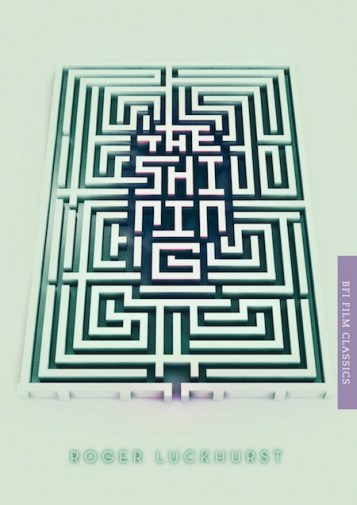
Roger Luckhurst offers a critical and entertaining survey of Kubrick’s horror masterpiece
Roger Luckhurst, The Shining (Palgrave, 2013).

In the thirty-seven years since its premiere, Stanley Kubrick’s The Shining (1980) has been the subject of heated debate. Based on a bestselling novel by Stephen King, the adaptation was dismissed by the author as ‘maddening, perverse, and disappointing’. His judgement was not unique. Critics and audiences alike found the film bewildering and strange, not knowing whether to take it as an art film or a low-brow horror shocker. Yet, as Roger Luckhurst points out in his excellent book, The Shining (BFI Classics, 2013), despite its chilly opening reception the film is now regarded as ‘one of the most admired horror films in cinema history’.

Luckhurst’s take on The Shining manages to pierce the lid on thirty years of critical discussion, and to yield a fresh perspective on one of cinema’s most discussed and perplexing films. The book addresses Stanley Kubrick’s status as a distinctive auteur filmmaker, but dismisses the tendency of critics to see deliberate intention in every move and gesture. Instead, Luckhurst reads The Shining within the broader cultural and historical context of late 1970s-early 1980s American culture. Insightful connections are made to films like The Amityville Horror (1979), The Omen (1976), Poltergeist and The Evil Dead (both released in 1982). Through its representation of prescient children, telepathy, and horror, Luckhurst reveals how The Shining expresses widely-held anxieties about traditional gender roles, the nuclear family, and histories of repressed trauma and violence. (more…)

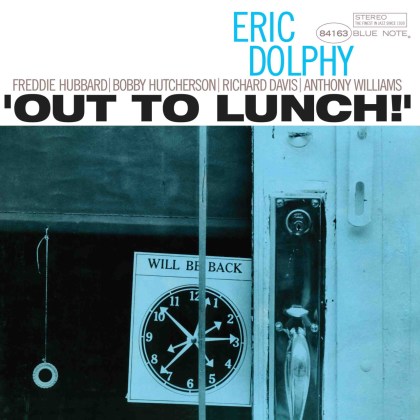
The avant-garde reedist’s iconic outing for Blue Note Records was recorded on this day in 1964
Eric Dolphy, Out to Lunch! (Blue Note, 1964)

On this day in 1964, Eric Dolphy entered Rudy Van Gelder’s studio in Englewood Cliffs, New Jersey, to record one of Blue Note Records’ most distinctive and iconic records. Joined by Freddie Hubbard (trumpet), Bobby Hutchinson (vibraphone), Richard Davis (bass) and an eighteen-year-old Anthony Williams (drums), Dolphy brought along his alto saxophone, bass clarinet, and flute for the date.

Out to Lunch! is the culmination of a sequence of recordings that explored the possibilities of avant-garde jazz in the early 1960s, from Dolphy’s first album as leader, Outward Bound (New Jazz, 1960), to Out There (New Jazz, 1960), to his 1961 recordings at the Five Spot and 1962’s Far Cry (New Jazz). Across these works we can hear the artistic development of Dolphy as a restless and inventive talent. Out to Lunch! nods a debt to bebop in its tribute to pianist Thelonious Monk (‘Hat and Beard’), and acknowledges the classical flautist Severino Gazzelloni (‘Gazzelloni’), but while the album negotiates the legacy of bebop and post-bop music it simultaneously reaches towards freer musical forms. (more…)