The letters allow readers to glimpse over the shoulder of one of twentieth-century drama’s most distinguished playwrights as he corresponds with actors, directors, and loved ones

A philosopher in the ancient Greek city of Miletus posed a question. If somebody adds one grain of sand to another, and repeats the process, at what point do the grains of sand become a heap? The conundrum, known as the Sorites paradox, opens Samuel Beckett’s Endgame as part of Clov’s speech to the auditorium: ‘Finished, it’s finished, nearly finished, it must be nearly finished. [Pause] Grain upon grain, one by one, and one day suddenly, there’s a heap, a little heap, the impossible heap’. The paradox asks us to confront the ambiguities of rational thinking and empirical observation, and in Endgame it frames the ‘impossible’ problem of being in the world, of what constitutes a life lived.

I was reminded of the Sorites paradox in 2016, when Cambridge University Press published the fourth and final volume of Samuel Beckett’s correspondence. On the instruction of Beckett himself, Martha Dow Fehsenfeld led an editorial team to assemble, transcribe and translate thousands of letters, telegrams, and postcards held in archives and private collections around the world. These traces of Beckett’s personal and artistic life have been ordered chronologically, and fully annotated with cultural and historical notes that are accessible to the scholar and layman alike. Surmounting this seemingly impossible task, The Letters of Samuel Beckett brings these documents together in one place for the first time to form a masterwork of academic scholarship and rigour — allowing readers to glimpse over the shoulder of one of twentieth-century drama’s most distinguished playwrights as he corresponds with actors, directors, and loved ones.

This is an excerpt from a review of The Letters of Samuel Beckett: Volume 4, 1966-1989, edited by George Craig et al.,  (Cambridge University Press, 2016), published in Studies in Theatre and Performance (July, 2017).

Angela Moorjani on co-editing a new collection which recounts Samuel Beckett’s meetings with scholars, translators, and theatre practitioners

To begin, could you say a little bit about Samuel Beckett Today/Aujourd’hui?

SBT/A is a refereed academic journal that publishes essays in English and French on Samuel Beckett’s oeuvre.

When first launched in 1992 by the late Marius Buning and the present coeditor in chief Sjef Houppermans, it took the form of a bilingual annual review publishing selections from international meetings or solicited essays on special topics, but also featuring a section of submitted articles. By 2016, the year SBT/A morphed into a semiannual journal under a different academic publisher (Brill), twenty-seven handsome hardcover volumes had appeared under the Rodopi imprint. My association with SBT/A goes back twenty years with an essay in the “Crossroads and Borderlines” volume of 1997, further intensifying with my coediting the volume based on the “Beckett in Berlin 2000” symposium, after which I was invited to join the editorial board. I served as coeditor in chief from 2008 to 2016. (more…)

Robert Cohen on co-editing a new anthology where established writers discuss their practice and vocation
The Writer's Reader: Vocation, Preparation, Creation, eds. Robert Cohen and Jay Parini (Bloomsbury, 2017).
The Writer’s Reader: Vocation, Preparation, Creation, eds. Robert Cohen and Jay Parini (Bloomsbury, 2017).

How did you come to put together The Writer’s Reader?

[Jay Parini, my co-editor, and I] both taught workshops for emerging writers — here at Middlebury, at the Bread Loaf Writers Conference, at Iowa and Harvard and elsewhere — for more years than we care to think about, and all that time we’ve been Xeroxing certain essays we love, essays that seem particularly well-suited to providing consolation, instruction, and the muscle of inspiration, not just to the small-w aspect of the practice but to the larger, more long-term, capital-W sense as well. At a certain point it became almost physically painful, not having these essays between covers (especially the ones out of print), not being able to share them in an easy, accessible way. It just seemed somehow stupid and wrong that there was no way to introduce a new generation of writers to Natalia Ginzburg’s piece, say, or Tillie Olsen’s, or Ted Solotaroff’s, or Danilo Kis’ — to name just three of the wiser, more over-arching essays about the writer’s life you’re ever likely to find. (more…)

Michael Richardson discusses how literature can help shed new light on our understanding of torture, trauma, and affect
Michael Richardson, Gestures of Testimony (Bloomsbury, 2016)

How did you come to write Gestures of Testimony?

One of Barack Obama’s first acts as President was to declassify the Torture Memos of the Bush Administration. Suddenly, the architecture of American torture was visible to an extent that it had never been before. At the time, I was working as a speechwriter in Canada for Jack Layton, who was then the leader of the New Democratic Party, and watching very closely what was happening across the border. I became obsessed with how torture was articulated and authorised, and even more so with the effect it had on both survivors and perpetrators. I’ve always understood the world through writing and literature, so I wanted to understand torture in that context too. That led me to a PhD on torture, literature and politics, and from there to writing Gestures of Testimony. (more…)

Sarah Hammerschlag discusses how the work of Levinas and Derrida can help us to rethink the relationship between religion, literature, and philosophy

What motivated you to write the book?

Sarah Hammerschlag, Broken Tablets: Levines, Derrida, and the Literary Afterlife of Religion (Columbia University Press, 2016)
Sarah Hammerschlag, Broken Tablets: Levinas, Derrida, and the Literary Afterlife of Religion (Columbia University Press, 2016)

This project developed organically out of my first book The Figural Jew, which focuses on the revalorization of the figure of the Jew in post-World War II French literature and philosophy. At the center of that project there was already a nascent argument for introducing literary modes of speech into the political sphere to capitalize on the ways in which irony and plurivocity complicate the politics of identity. The last couple of chapters of that book argue that Blanchot and Derrida develop a literary concept of the Jew and Judaism through a reading of Levinas. But I was still concerned to represent the differences between Derrida and Levinas on the question of how to think about the cultural relevance of Judaism in the post-WWII context and to consider the very important political implications of their respective choices. Broken Tablets  gave me the opportunity to track the implications of those differences and to conceive of them in terms of how each philosopher negotiated his relationship to religion and literature as competing discourses to philosophy. (more…)

Victor Brombert discusses how literature reflects changing ideas about life, death, and the condition of mortality
Victor Brombert, Musings on Mortality: From Tolstoy to Primo Levi (University of Chicago Press, 2016)

What motivated you to write the book?

Probably it was an early childhood and adolescent awareness of our mortal condition, of human vulnerability in general: the death in infancy of my younger sister (I was seven years old), the assault on human life and dignity by totalitarian regimes that forced families like mine into multiple exiles, and later the experience of war and the Nazi occupation of France, our escape to the United States on an overcrowded freighter zigzagging for six weeks across the Atlantic to elude German U-boats, my joining the American army and surviving the Omaha Beach landing and the Battle of the Bulge — perhaps above all the growing belief that all valuable human achievements, especially in literature and the arts, were a defiance of death.

Your subtitle traces a history between Leo Tolstoy and Primo Levi. What is significant about these two writers?

It is a long trajectory between Tolstoy and Primo Levi. The distance and the contrast tell a story. Whereas Tolstoy in The Death of Ivan Ilych is concerned with an exemplary individual, his morally and spiritually empty life, and his ultimate salvational epiphany at the hour of death, Primo Levi by contrast is dealing with a collective moral and political context in which private salvation is no longer thinkable. The trajectory as well as the authors along the way tell the story of the 20th century as that of a growing awareness of a collective tragedy. (more…)

Calum Gardner talks about editing a special edition of Barthes Studies exploring the writer’s relationship to poetry
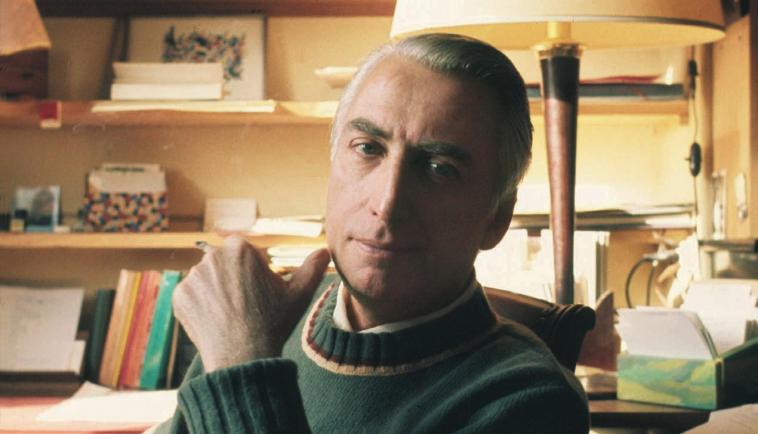
roland-barthes
Roland Barthes

What kind of academic journal is Barthes Studies?

Barthes Studies is an open-access online journal dedicated to the work of influential French literary and cultural theorist and critic Roland Barthes. It’s the only such journal in English (although there is an older French equivalent, the Revue Roland Barthes), and it was founded by Neil Badmington in 2015 with an issue that marked the centenary of Barthes’ birth. It’s interdisciplinary, has published articles by those working in French studies, English studies, literary theory, and cultural theory, and is open to those working in any area that has to do with Barthes. Because of the breadth and variety of his interests and writings, this is a very wide remit indeed!

What inspired you to oversee an issue devoted to the subject of poetry?

I think a few years ago, many people who are interested in Barthes, particularly in the UK, were seeing that there was a gap: it was commonly assumed that Barthes had something to say that was of relevance to poetry, and perhaps experimental poetry in particular, but why had so little been written about Barthes and poetry? I looked at a lot of books about poetry and found that in the index they would have one or two references to Barthes, but that these would lead to passing references to his most famous ‘The Death of the Author’ – an essay we assumed all the poets and poetry critics were familiar with, but nobody wanted to seem to talk about why, or how they got that way. When I started my PhD at Cardiff’ in 2013, I was hoping to fill this gap. (more…)