
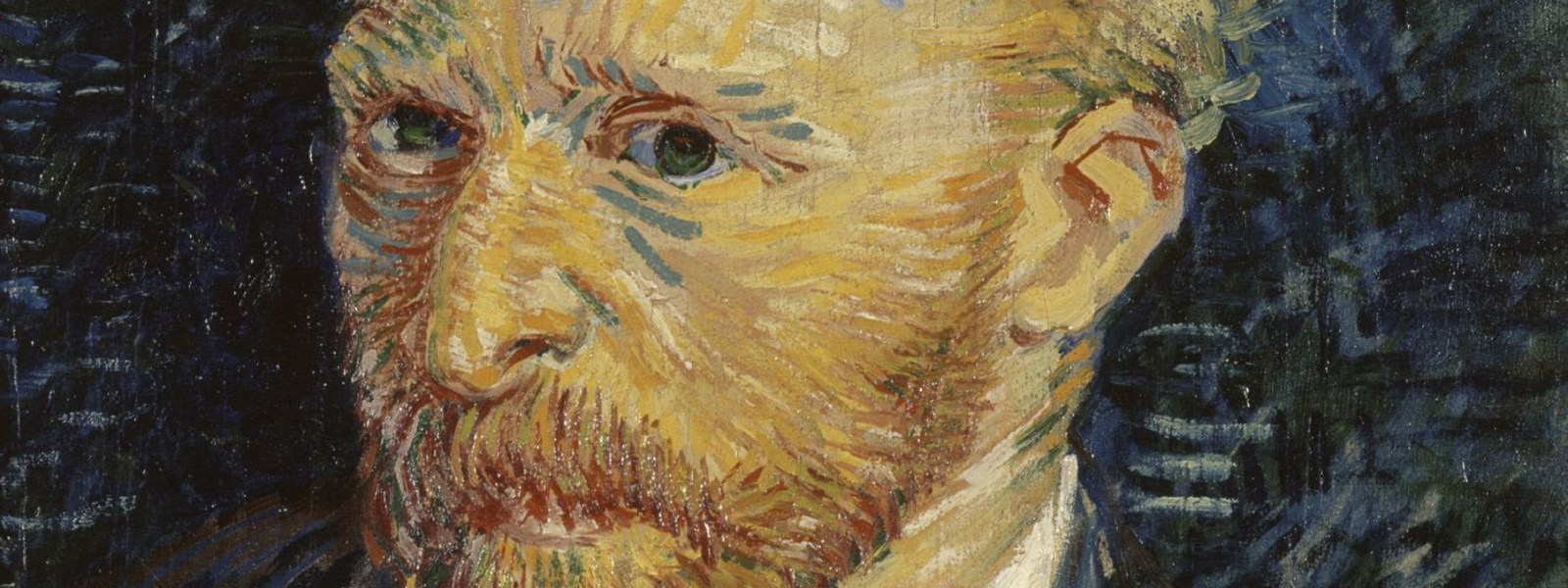

In the years leading up to my conversion, I gradually became fascinated by Thomas á Kempis’s devotional text, The Imitation of Christ. I encountered it first in the letters of the young Samuel Beckett, and next in the interviews of Estonian composer Arvo Pärt, and then in all kinds of other unexpected places. Among them, this 1877 letter from Vincent Van Gogh to his beloved brother, Theo:
“Am also busy copying out the whole of [Thomas á Kempis’s] L’imitation de Jésus Christ from a French edition I’ve borrowed from Uncle Cor, that book is sublime, and he who wrote it must have been a man after God’s heart; had such an irresistible yearning for that book a few days ago, perhaps because I look at that lithograph after Ruipérez so often, and asked Uncle Cor if I could borrow it. Now I sit here in the evenings writing it out, it’s a lot of work but a good part of it is done, and I know no better way of getting some of it into my head. I also bought Bossuet, Oraisons funèbres again (I got it for 40 cents), I feel compelled to seize hold of the task forcefully, I occasionally think of those words ‘the days are evil’, and one must arm oneself and try as much as possible to have something good in oneself in order to be able to withstand and be prepared. It is, as you well know, no small undertaking, and we don’t know the outcome, and so in any case I want to try and fight a good fight.
It’s a curious book, that one by Thomas á Kempis, there are words so deep and serious that one cannot read them without emotion and almost fear, at least if one reads them with a sincere desire for light and truth, that language is indeed the eloquence that wins hearts because it comes from the heart. You have it, surely. Pa wrote to me about an unfortunate incident that occurred at Uncle Vincent’s. You no doubt know about it already, namely that the wife of the Rev. Richard fell down the stairs one evening and is in a very distressing condition. And so one hears daily now one thing then another, everywhere and on all sides, which is why I have at least the impression that ‘the days are evil’. Because even if it doesn’t happen to us, one feels nonetheless that perhaps it isn’t far from us either, and that we are in the same ordeal, as it were. The fashion of this world passeth away – yet would I have thee without carefulness. 1v:2
‘Yet would I have thee without carefulness’, doesn’t that say, as far as you’re concerned, feel all these things, ‘feel thy sorrows’, and keep them in thine heart with the others, but go your way, ‘return on thy way’, remain the same as you were in the beginning, when you sought good and thought to have found something of it – for God, too, is the same as He was in the beginning, and with Him is no variableness, neither shadow of turning – thou, too, have a right spirit within you and have faith in God, for those who trust in Him will not be ashamed. We see that in our father, who feels all the suffering, all the misery and also all the sin around him, who also shares in it and helps as much as he possibly can, and yet goes his own steady way, doing good and not looking back. Yes, it is certainly true, he has the spirit Jesus had, that spirit of which He said: Father, into Thy hands I commend My spirit. And so many have the same – although not in such great measure – that it isn’t a hopeless task for us to strive for it also.
‘Be zealous in amending your whole life’ is written in Thomas a Kempis, and that is what one must do and not give up, not even if one is frightened by the wrong that is in us and that rightly causes us to say, I alone have caused all this misery to myself and others – he who feels that, for him it is time, that is ‘the very man’. For such people it is written ‘Ye must be born again’. For such people the word of the Lord shall be a lamp and He himself through those words a Friend and Comforter, and godly sorrow shall worketh that which it shall worketh if one does not fear it.”
— Vincent Van Gogh, 4 September 1877
Discover more from RhysTranter.com
Subscribe to get the latest posts sent to your email.


Thanks Rhys, This has once again sent me back to a Kempis, yet still prefer the austere beauty of Augustine. The latter struggles, the former excels, perhaps Paul Stewart stewartp@me.com

>
LikeLiked by 1 person
Ah! Augustine! My Confirmation saint! 😊
LikeLike