

What can great works of art teach us? How do they speak of the joys and trials of our everyday lives?
There is so much to recommend about Giuseppe Mazzotta’s Yale course on Dante in Translation that it’s difficult to know where to start. So, why not start at the beginning?
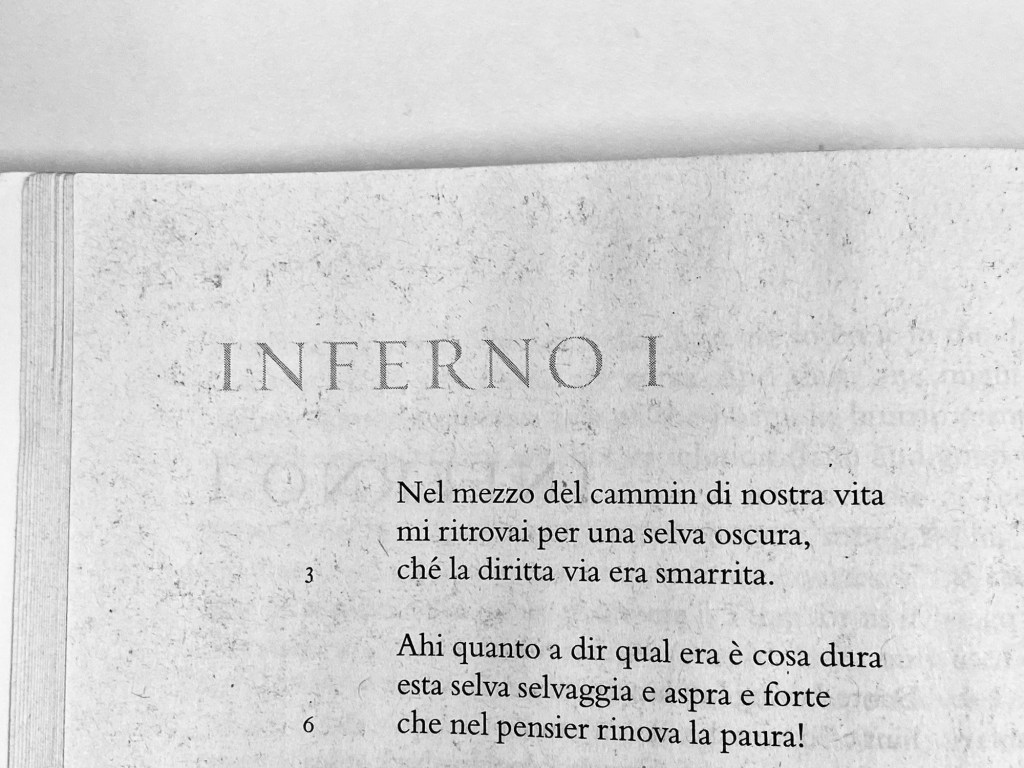
In the opening chapter of Mazzotta’s Reading Dante, a revised transcript of the lecture series, he traces a vision of Dante’s masterpiece as a kind of encyclopaedia, or ‘circle of knowledge’, that follows the path of a human life.
Nodding to the medieval tradition of the ‘liberal arts’ (from the Latin root liber, meaning ‘free’), Mazzotta holds up Dante’s epic as a journey of individual struggle, of growth and change, and finally of purpose towards a shared and ultimate goal.
While the story is fantastical and the cast ranges from the grotesque to the sublime, the world that Dante and his guide enter is, in some strange sense, a world that we recognise as our own.
“The Comedy is the story of nothing less than seeing God face to face and coming back to tell the tale. Seeing God, being overwhelmed and dazzled by God, places the text squarely in a tradition of visionary literature, but here I will emphasize the writing of the poem about this fundamental experience. So, what kind of poem is this? What is its genre? Is it an epic? Is it an autobiography? Is it a romance? I think it’s all of the above. Perhaps the best term for it is encyclopedia, a word that means a ‘circle of knowledge,’ representing a classical idea that derives from Vitruvius, who wrote of the genre. This idea of circularity is crucial, in the sense that to know something you have to have a point of departure, from which you will pass through all the various disciplines of the liberal arts, only to arrive right back where you started. The beginning and the ending in a liberal education must coincide, but you will find out things along the way that allow you to see with a different viewpoint or perspective.
So Dante has written an encyclopedia, taken to ordering a tradition of liberal arts. But what are these liberal arts? The liberal arts are the arts of words (as opposed to the arts of numbers like arithmetic, geometry, music, astronomy, and they include grammar, which also encompasses poetry and history; dialectics, or the art of deciding what the truth of a statement may be; and rhetoric, or the art of persuasion. The aim of these liberal arts is to arrive at ethics, metaphysics, and theology. And why are they called liberal? They are called liberal to distinguish them from the so-called mechanical arts, an old medieval distinction, and they are also called liberal because their aim is to free us. It’s as if knowledge contains within itself the power to give us some form of freedom, to free us from various sorts of tyranny: the tyranny of action, above all, the tyranny of having to do things with your hands that will distract you from the great aims of theory, contemplation, and thinking. So, the implication of calling the Divine Comedy an encyclopedia is that clearly it deals with education, with the path to knowledge. The aim of any encyclopedia is to educate its readers.”
— Giuseppe Mazzotta, Reading Dante.
Discover more from RhysTranter.com
Subscribe to get the latest posts sent to your email.
 RhysTranter.com