Revisiting the jazz innovator’s much overlooked minor classic
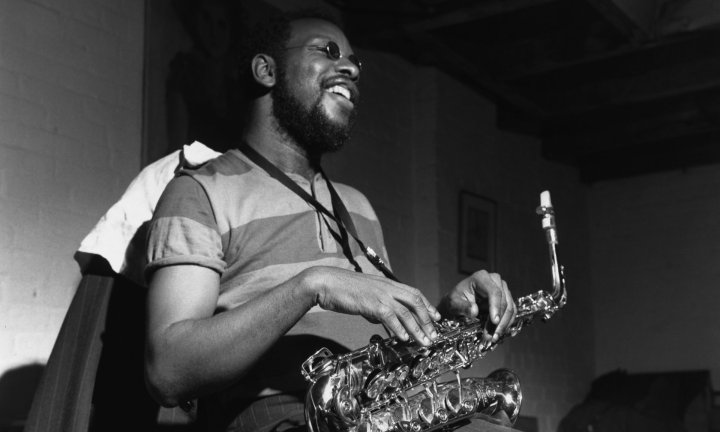
Ornette Coleman with his saxophone during a rehearsal for The Empty Foxhole, September 1966. Photograph: Francis Wolff.
Ornette Coleman‘s The Empty Foxhole was recorded at the Van Gelder studio 50 years ago today. It was his first studio recording for the Blue Note label, and the avant-garde composer wastes no time performing trumpet, violin, and his signature alto-saxophone. Longtime collaborator Charlie Haden (who followed this website before he passed away) appears on bass. But the personnel is perhaps most notable for the debut appearance of Coleman’s son, Denardo, on drums: he was just ten years old at the time.
The writer and journalist talks about This Is the Place to Be, and the influences that motivate her
Lara Pawson. Photograph: Julian Richards.
Lara Pawson, This Is the Place to Be
This month brings the release of Lara Pawson’s new memoir, This Is the Place to Be, published by CB editions. Written in a fragmentary form, the book deals with Pawson’s experiences as a witness of war in Angola and Ivory Coast. The writer Joanna Walsh praises it for the way it ‘unpicks the spirals of memory, politics, violence, to trace the boundaries and crossing points of gender and race identity.’ I caught up with Pawson to ask her about This Is the Place to Be, and to find out more about her motivations and influences.
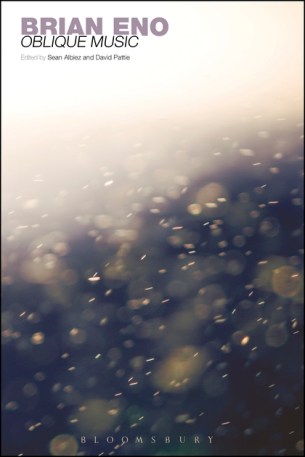
To mark the release of Brian Eno: Oblique Music, a new collection of essays celebrating the musician’s life and work, I talk to the editors about their shared obsession
You previously collaborated on a book of essays about the German electronic group Kraftwerk. What made you decide to put together a book about Eno?
Brian Eno: Oblique Music, eds. Sean Albiez & David Pattie (Bloomsbury, 2016)
Sean Albiez: In the final stages of the editing and writing process of Kraftwerk: Music Non Stop we started to discuss further book projects as, though we had never met before starting the book, we found that we enjoyed our collaborative process and had many similar musical interests. It think it was David who initially suggested looking at Brian Eno. Eno has been a major figure in music since the 1970s and yet little academic attention had been paid to his work. Any attention that had been given seemed to repeat and replay the same ideas and stories. So we felt that undertaking detailed research on Eno’s diverse activities over several decades from a range of academic perspectives would produce new ways of thinking about his work.
“As Eno says, he’s very interested in the idea of music as landscape; and it’s a landscape that I’m quite happy to inhabit.”
David: As Sean said, we’d enjoyed working together on the Kraftwerk book; and when we were discussing other projects Eno seemed to be the obvious next option. He’s amassed quite a reputation as popular music’s resident intellectual, but, aside from one book in the 1990s, his work hadn’t been given the kind of in-depth analysis it deserves. On a more personal level, I’ve been listening to Eno’s solo work for over three decades, and I find it endlessly fascinating. As Eno says, he’s very interested in the idea of music as landscape; and it’s a landscape that I’m quite happy to inhabit. (more…)
A celebration of veteran cinematographer Frederick Elmes
John Turturro and Riz Ahmed star in HBO’s The Night Of
For the last eight weeks, Sundays have been the night of The Night Of, a dark HBO crime story set in New York. The show blended police procedural, courtroom drama, and character study to produce mystery, suspense, and black humour. Based on a five-part UK drama produced by the BBC in 2008-9, the mini-series centres on a man accused of murder after a night of drugs and heavy drinking. Riz Ahmed is excellent as the young Muslim defendant, inspiring sympathy and suspicion in equal measure. And John Turturro steals the show as an opportunistic lawyer who leads the defence (a role originally intended for late Sopranos star James Gandolfini).
The most important sound engineer in jazz history has died, aged 91
Rudy Van Gelder with Blue Note Records producer Alfred Lion.
Rudy Van Gelder’s recording studio. Englewood Cliffs, New Jersey.
If you’ve ever heard a jazz record, chances are you’ve heard the work of Rudy Van Gelder. But you wouldn’t have heard him playing the drums, the piano, the saxophone, or the trumpet (although he had lessons in his youth) – and you wouldn’t have heard him singing into the microphone. That’s because he was the microphone. In a manner of speaking. Born in New Jersey on 2 November 1924, Rudolph (Rudy) Van Gelder became the most prominent sound engineer in American jazz history. He recorded just about every major figure in the canon, including Miles Davis, John Coltrane, Thelonious Monk, and Sonny Rollins.
What the hit Netflix show can tell us about our fascination with ’80s nostalgia and American suburban gothic
The word ‘stranger’ can suggest many things. One antiquated definition, used in the 18th and 19th century, refers to ‘things which are popularly imagined to forebode the coming of an unexpected visitor’ (OED). These ‘things’ might refer to tea leaves floating in a cup, a moth appearing suddenly out of the dark, or candlewax that causes the light of a flame to flicker and die. For viewers of Netflix’s thrilling new drama, Stranger Things, this superstition holds a unique significance.
Simon Critchley’s philosophical antidote to the self-help manual
Since when did happiness, wisdom and contentment become the cornerstones of a fulfilling life? Whatever happened to doubt? Instability? Melancholia? In 2010, Polity Press published How to Stop Living and Start Worrying, a collection of interviews with Simon Critchley which playfully parodies the conventional self-help manual. Through a series of conversations with Carl Cedeström, Critchley sketches an alternative view of the role philosophy plays in our lives today, covering an ambitious range of topics: from science and religion, to poetry and politics, love and humour, life and death.
Critchley, a philosophy professor who teaches in New York, takes us step-by-step through the major themes of his work in an entertaining and accessible way. Each interview takes the form of an informal, improvised chat on a theoretical topic, elucidating terms and concepts with helpful metaphors and memorable anecdotes. Jokes also play a key role in the overall tone of the book, illuminating central ideas with a lightness of touch. (more…)





 RhysTranter.com