A new study explores the potential for agency and flight in post-war working-class writing

“I’m not working-class: I come from the criminal classes.” These words by the actor Peter O’Toole play on a broader prejudice that aligns working-class identity with marginality and transgression. Roberto del Valle Alcalá explores these thematic links in British Working-Class Fiction, which traces an alternative literary history of the British Isles, spanning from 1950 to the economic collapse of 2008. Alcalá documents life on the hard shoulder of modern capitalist progress, offering an analysis of working-class experience through detailed theoretical readings of Alan Sillitoe, Pat Barker, Irvine Welsh, Monica Ali and others. [Read More]

This extract is from my review of Roberto del Valle Alcalá’s British Working-Class Fiction: Narratives of Refusal and the Struggle Against Work, published in the Times Literary Supplement, 24 February 2017.

A new historical novel watches the rise of Nazism through the eyes of Sigmund Freud and a boy from the country
Robert Seethaler, The Tobacconist

Can you imagine getting dating advice from Freud? This is one of the conceits of Robert Seethaler’s The Tobacconist, recently published by Picador in a translation by Charlotte Collins. The novel is a coming-of-age story about Franz, a seventeen-year-old boy who leaves his rural town to become a tobacconist’s apprentice in Vienna in the 1930s. As the naïve young Franz is dazzled by the lights and stimulations of the modern city, Dr Freud appears as a customer in the small tobacco shop where he works. They strike up cigars and conversation, and speculate on love, life, and a rapidly-changing world.

Seethaler rose to prominence with A Whole Life (2014), a novel shortlisted for the Man Booker International Prize. Praised by Margaret Atwood and Ian McEwan, the text explored the influence of modernity and the Second World War on traditional ways of life. Seethaler’s interest in this theme persists in The Tobacconist, where what begins as a whimsical tale shifts gear into a novel exploring the rise of fascism in Austria. The forces of history push Franz towards maturity, and he transitions from a wide-eyed witness to tragic commentator on antisemitism, political violence, and populist rhetoric. (more…)

A new fully-illustrated volume offers a fascinating portrait of Austria’s most significant post-war writer
Thomas Bernhard, 3 Days: From the Film By Ferry Radax (Blast Books, 2016)

In the summer of 1970, experimental filmmaker Ferry Radax arranged to meet with the Austrian writer Thomas Bernhard. Over the course of three days, Radax recorded the writer amid the pleasant surroundings of a park in Hamburg. For readers familiar with Bernhard’s work, the setting was incongruous: his novels Frost (1963), Gargoyles (1967) and The Lime Works (1970) portray dark, grotesque landscapes of murder, ignorance, and obsession. As Bernhard himself admits, ‘I am hardly a cheery author’. And yet, in such bright and affable settings, Radax manages to capture a revealing portrait of the writer George Steiner called ‘the foremost craftsmen of German prose after Kafka and Musil.’

Blast Books, an independent publisher in New York, has taken a great deal of care to adapt Radax’s film, entitled 3 Days, into a book. The beautifully presented hardback volume includes Thomas Bernhard’s own reflections on Radax’s film, and a fully-illustrated record of the documentary translated from the German by Laura Lindgren. Also included is a critical afterword by film scholar Georg Vogt, and a fully-illustrated appendix of Radax’s notes for the filmmaking. The book makes considered use of space, word, and image to capture the spirit of Radax’s documentary, and the rhythms and emphasis of Bernhard’s monologues. (more…)

How Stephen King’s second novel cemented his reputation as America’s foremost horror writer
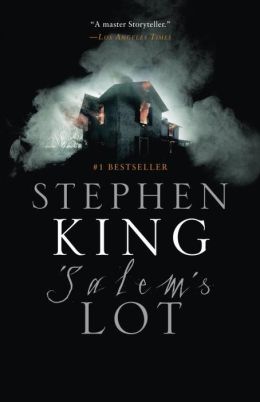
Stephen King, Salem's Lot
Stephen King, ‘Salem’s Lot

Stephen King first found his way onto the international stage with 1974’s bestseller, Carrie. But it was his next published novel, ‘Salem’s Lot, that cemented his reputation as America’s foremost writer of horror fiction. King, who had been working in obscurity until his newfound success, had two unpublished manuscripts. In his 2005 introduction to ‘Salem’s Lot, King recalls a conversation with his editor Bill Thompson, who was enthusiastic about one of the two manuscripts, calling it ‘Peyton Place with vampires’. It had bestselling potential, Thompson had said, but there was one problem: the decision would forever type him as a horror writer. King was relieved: ‘I don’t care what they call me as long as the checks don’t bounce’.

The cheques didn’t bounce. In the four decades since ‘Salem Lot’s publication in 1975, Stephen King has become one of the world’s bestselling living authors. And, while his work ranges a broad range of styles and genres, including thrillers, fantasy, and nonfiction, his reputation as the ‘King of Horror’ persists. It seems Thompson had been right on both counts. (more…)

A new short story collection from NYRB celebrates what is enigmatic about everyday minutiae
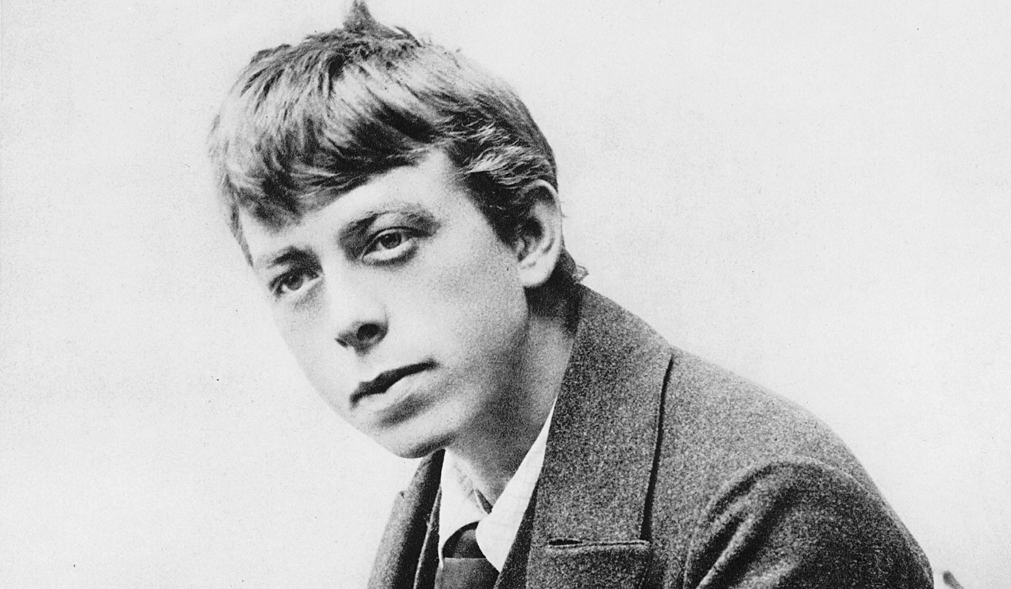
robert-walser
Robert Walser

Feuilleton. Traditionally, a ‘feuilleton’ is a portion at the bottom of a French newspaper that is kept free for light literature, criticism, and commentary. It derives from the word ‘feuille’, meaning ‘leaf’. By its very nature, the feuilleton is marginal and fragmentary. For the early twentieth-century author Robert Walser, this became an ideal medium for his wandering and ephemeral style.

The NYRB’s wonderful new collection of the Swiss writer’s short texts, entitled Girlfriends, Ghosts, and Other Stories, allows us to leaf through a life of extraordinary writing. The German writer and academic W. G. Sebald, using Walser’s own words, described him as a ‘clairvoyant of the small’, a writer of prose ‘at odds with the demands of high culture’. Tom Whalen’s afterword to the NYRB volume echoes this sentiment, recognizing in Walser a sensibility of ‘sovereign insignificance’. Whalen continues: ‘For the fueilletonist anything can be an occasion for a prose piece: a walk in the mountains, a new hairstyle, an old fountain, shopwindows, a kitten, a carousel, a Parisian newspaper’. As Walser drifts aimlessly through the modern European city, we share his curiosity and wonder at the small details of this strange and peculiar life.

(more…)

Joseph Anderton’s compelling new study explores the role of creaturely life in Beckett’s post-war prose and drama

Joseph Anderton, Beckett's Creatures: Art of Failure After the Holocaust (Bloomsbury, 2016)
Joseph Anderton, Beckett’s Creatures: Art of Failure After the Holocaust (Bloomsbury, 2016)
In the immediate aftermath of the Second World War, Samuel Beckett volunteered with the Irish Red Cross on the European continent. With a strong grasp several languages, the writer was assigned the role of driver and translator in the devastated Normandy city of Saint-Lô. During this time, while still stationed in the city, Beckett submitted a record of his experiences to Ireland’s national broadcaster, Radio Telefis Éireann (RTÉ). It was entitled ‘The Capital of the Ruins’. This unaired report on a landscape of wounded civilian casualties and collapsed buildings is the starting point for Joseph Anderton’s compelling new study, Beckett’s Creatures: Art of Failure After the Holocaust. [Read More]

This is an excerpt from a review of Joseph Anderton’s Beckett’s Creatures: Art of Failure After the Holocaust (Bloomsbury, 2016), published in Studies in Theatre and Performance(October, 2016).

A new title refines and condenses more than a decade of Jean-Michel Rabaté’s thinking on Beckett

Jean-Michel Rabaté , Think, Pig! Beckett at the Limit of the Human (Fordham University Press, 2016)
Glancing at the title of Jean-Michel Rabaté’s excellent new book, you might be forgiven for thinking it was some kind of self-help manual from the shelf of tough love. The author clears up any confusion: “This is not a self-help book”, he writes; rather it undermines such projects of affirmation by “questioning the humanism that we take for granted”. Through the motif of the “animal”, Samuel Beckett’s prose and drama re-examines what it means to be human in the aftermath of the Second World War. Think, Pig! (Pozzo’s demoralizing order to Lucky in Waiting for Godot) refines and condenses more than a decade of Rabaté’s thinking on Beckett. The book’s focus is ethical and interrogative, but is peppered with a lively and inventive sense of humour. [Read More]

This extract is from my review of Jean-Michel Rabaté’s Think, Pig! Beckett at the Limit of the Human, published in the Times Literary Supplement, 14 October 2016.