
31 July marks the feast day of Saint Ignatius Loyola (b.1491), the founder of the Society of Jesus (more commonly known as the Jesuits). In a breviary, I was interested to read a passage from the Acts of Saint Ignatius taken down by Luis Gonzalez, which describes the reading habits of the young saint:
(more…)Category: Religion
The Life of Saint Pambo
Reading Butler’s Lives of the Saints, I come across a passage on St Pambo, an Egyptian monk (c.390) thought to be a disciple of St Antony. I was struck by the following passage:
“His life was typical of the desert monks: hard manual labour, long fasts and physical penance, and sustained periods of prayer. Pambo was especially noted for his silence and a reluctance to speak any more than was necessary, seeing in control of the tongue a basic first step towards a deeper spirituality; he is said to have meditated on this verse from the Psalms for six months: ‘I will watch how I behave, and not let my tongue lead me into sin’ (Ps. 39:1). On the other hand, he had a broader outlook than many of his colleagues in the desert and did not believe their way of life was necessarily the best; he settled an argument between to monks as to which was more perfect, becoming a monk or staying in the world and doing works of mercy, by saying: ‘Before God both are perfect. There are other roads to perfection besides being a monk.'” (18 July, Butler’s Lives of the Saints)
The Letters of Thomas Merton
I recently finished re-reading Merton’s The Seven Storey Mountain, one of my favourite books. Now, I am dipping into the multi-volume edition of his letters. All of the books are secondhand copies, and I am sure that some of them have their own stories to tell. My copy of the first volume once sat on the shelves of a branch of The New York Public Library at 455 Fifth Avenue in Mid-Manhattan.
The letters are collected according to theme. There’s a volume of correspondence covering Merton‘s close friendships; there’s one devoted to poetry, literature, and the vocation of writing; and yet another two that deal with religious experience. The fifth and final volume collects together his letters on “Times of Crisis”. I think I might start with that one.
A New Role at St David’s Catholic College, Cardiff
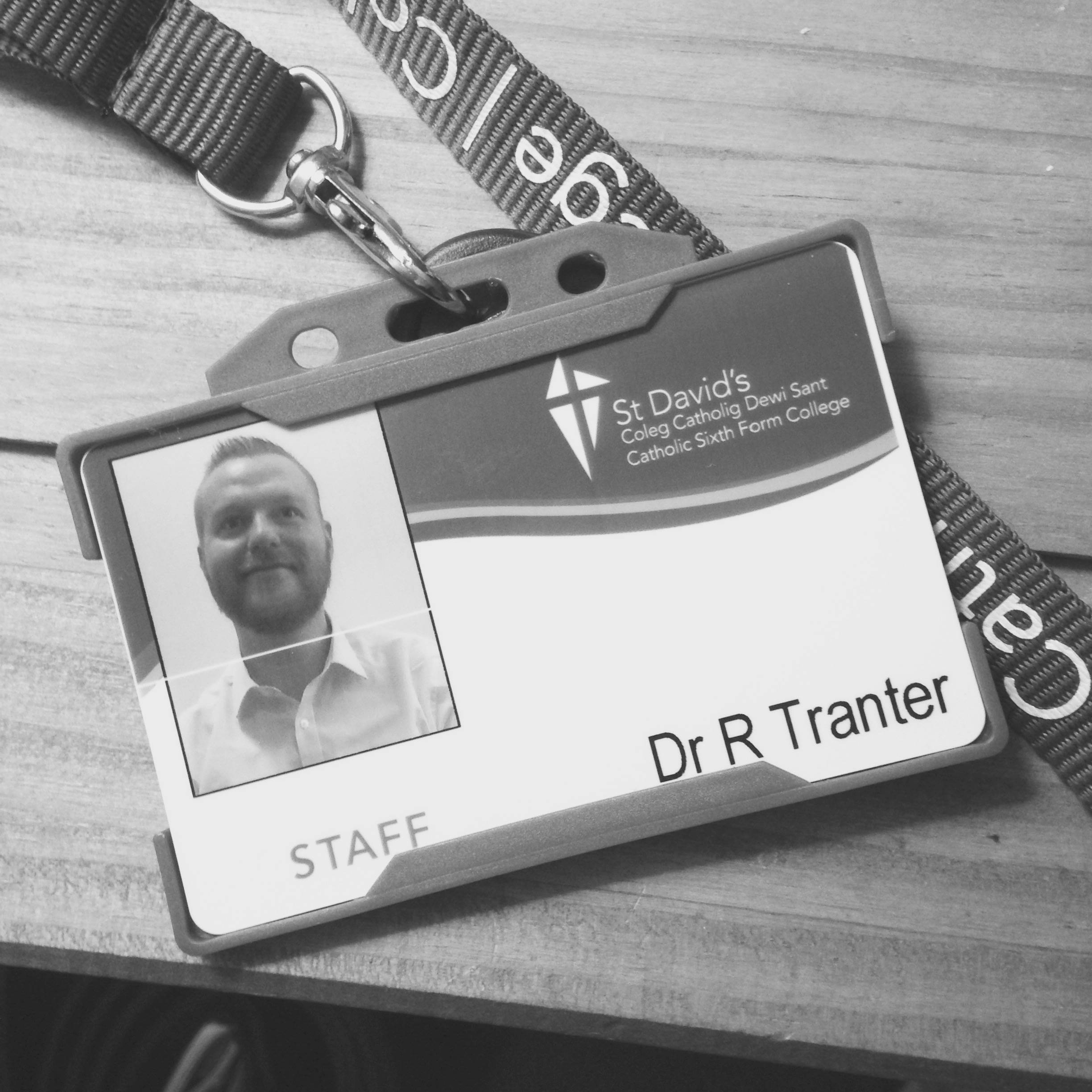
I have just started a new role as a pastoral tutor at St David’s Catholic College in Cardiff. Over the last two years I have been looking for a secure full-time job that would allow me to draw on my teaching skills and experience, while also offering an opportunity to serve my local community in a direct and meaningful way. I am absolutely thrilled.
Notes on Blindness
“The most important thing in life is not happiness but meaning.”
— John M. Hull, Notes on Blindness
Set in the summer of 1983, Notes on Blindness is a beautiful 2016 documentary that explores the life of writer and theologian John M. Hull.
Based on his memoir, Touching the Rock, the film offers a deeply personal account of an academic who permanently loses his vision while anticipating the birth of his son.
Filmmakers Peter Middleton and James Spinney draw from audio cassettes recorded by Hull at the time, which attempt to explain and understand the experience of blindness through vivid philosophical reflections on everyday events and experiences. (more…)
Visiting the John Muir family home


This week, it was my great privilege to visit the John Muir National Historic Site in Martinez, California. The beautiful Muir family home was restored from dereliction by the National Park Service, and pays tribute to the father of modern environmental conservation.
San Francisco Chronicle’s Year in Review: The Best Books of 2018
Delighted to see that my review of Cynthia Haven’s Evolution of Desire: A Life of René Girard is included among the San Francisco Chronicle‘s Year in Review: The Best Books of 2018.
 RhysTranter.com