
In the years leading up to my conversion, I gradually became fascinated by Thomas á Kempis’s devotional text, The Imitation of Christ. I encountered it first in the letters of the young Samuel Beckett, and next in the interviews of Estonian composer Arvo Pärt, and then in all kinds of other unexpected places. Among them, this 1877 letter from Vincent Van Gogh to his beloved brother, Theo:
(more…)Category: Quotes
Vivid Expression
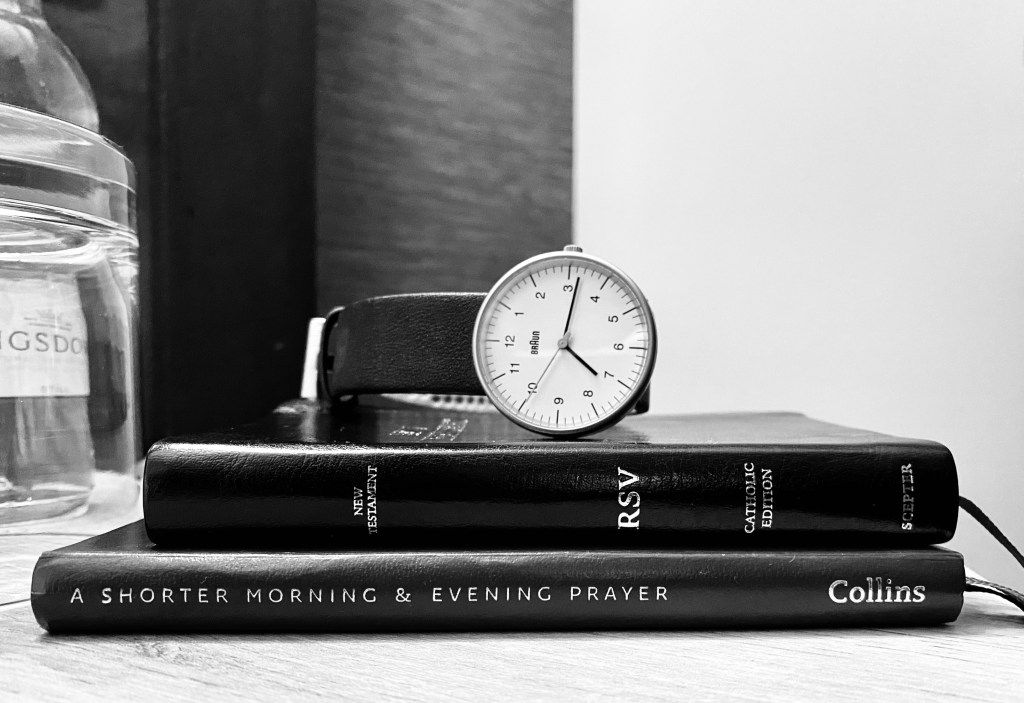
Corresponding from distant Paris, Fr Huvelin offers spiritual advice to St Charles de Foucauld as he works as a gardener in Nazareth:
“Nourish yourself on the Psalms, which give such vivid expression to the feelings that feed the soul united to God or in search of him.”
— 13 May 1897, qtd. in Jean-Jacques Antier, Charles de Foucauld
Cultivating Silence


Saturday afternoon. Revisiting Merton, Newman, and this from Madeleine Delbrêl:
“We are not lacking silence. We already have it. / If we lack silence, it is because we have not learned how to keep it. / All the noises that surround us make much less din than we ourselves do. / The real noise is the echo that things have in us. / It is not speaking that necessarily breaks the silence. / Silence is the place of the word of God, and if we confine ourselves to repeating this word, then we can speak without ceasing to be silent.”
— The Dazzling Light of God, trans. Mary Dudro Gordon
Ignatius Loyola: A Saint Reads the Saints
31 July marks the feast day of Saint Ignatius Loyola (b.1491), the founder of the Society of Jesus (more commonly known as the Jesuits). In a breviary, I was interested to read a passage from the Acts of Saint Ignatius taken down by Luis Gonzalez, which describes the reading habits of the young saint:
(more…)The Life of Saint Pambo
Reading Butler’s Lives of the Saints, I come across a passage on St Pambo, an Egyptian monk (c.390) thought to be a disciple of St Antony. I was struck by the following passage:
“His life was typical of the desert monks: hard manual labour, long fasts and physical penance, and sustained periods of prayer. Pambo was especially noted for his silence and a reluctance to speak any more than was necessary, seeing in control of the tongue a basic first step towards a deeper spirituality; he is said to have meditated on this verse from the Psalms for six months: ‘I will watch how I behave, and not let my tongue lead me into sin’ (Ps. 39:1). On the other hand, he had a broader outlook than many of his colleagues in the desert and did not believe their way of life was necessarily the best; he settled an argument between to monks as to which was more perfect, becoming a monk or staying in the world and doing works of mercy, by saying: ‘Before God both are perfect. There are other roads to perfection besides being a monk.'” (18 July, Butler’s Lives of the Saints)
Thomas Merton: How Activism and Overwork can become Counterproductive

“There is a pervasive form of contemporary violence to which the idealist most easily succumbs: activism and overwork. The rush and pressure of modern life are a form, perhaps the most common form, of its innate violence. To allow oneself to be carried away by a multitude of conflicting concerns, to surrender to too many demands, to commit oneself to too many projects, to want to help everyone in everything, is to succumb to violence. The frenzy of our activism neutralizes our work for peace. It destroys our own inner capacity for peace. It destroys the fruitfulness of our own work, because it kills the root of inner wisdom which makes work fruitful.”
— Thomas Merton, Conjectures of a Guilty Bystander
John Muir: “I am degenerating into a machine for making money”
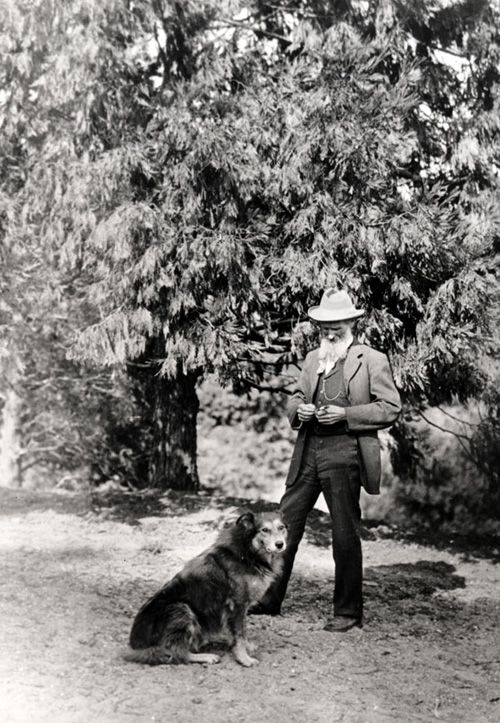
“I am losing precious days. I am degenerating into a machine for making money. I am learning nothing in this trivial world of men. I must break away and get out into the mountains to learn the news.”
— John Muir
 RhysTranter.com