Sarah Hammerschlag discusses how the work of Levinas and Derrida can help us to rethink the relationship between religion, literature, and philosophy

What motivated you to write the book?

Sarah Hammerschlag, Broken Tablets: Levines, Derrida, and the Literary Afterlife of Religion (Columbia University Press, 2016)
Sarah Hammerschlag, Broken Tablets: Levinas, Derrida, and the Literary Afterlife of Religion (Columbia University Press, 2016)

This project developed organically out of my first book The Figural Jew, which focuses on the revalorization of the figure of the Jew in post-World War II French literature and philosophy. At the center of that project there was already a nascent argument for introducing literary modes of speech into the political sphere to capitalize on the ways in which irony and plurivocity complicate the politics of identity. The last couple of chapters of that book argue that Blanchot and Derrida develop a literary concept of the Jew and Judaism through a reading of Levinas. But I was still concerned to represent the differences between Derrida and Levinas on the question of how to think about the cultural relevance of Judaism in the post-WWII context and to consider the very important political implications of their respective choices. Broken Tablets  gave me the opportunity to track the implications of those differences and to conceive of them in terms of how each philosopher negotiated his relationship to religion and literature as competing discourses to philosophy. (more…)

Michael Lackey on the popularity of the biographical novel, and what it can tell us about the relationship between literature, history and truth
Michael Lackey, The American Biographical Novel (Bloomsbury, 2016)

What motivated you to write The American Biographical Novel

Through my reading of biographical novels, I noticed a shift in the nature of literary truth.  In Heart of Darkness, Joseph Conrad illuminates the colonial mentality that enabled Europeans to plunder Africa and to abuse Africans with impunity.  Conrad represents that mentality through Kurtz, and as the narrator says, “all Europe contributed to the making of Kurtz.”  In essence, if we want to understand the European mentality that justified colonization and its horrific outcomes, we can look to Kurtz for some answers.  But with the rise of postmodernism, there has been growing skepticism about the traditional literary symbol.

Put simply, postmodernists question the value of an overarching truth claim, because they realize that someone constructed that truth for an ideological or political reason.  This approach to truth impacted the traditional literary symbol, so a postmodernist could easily say: “Look, Joe, you constructed the character of Kurtz in order to promote your own ideological agenda.  Therefore, I don’t see any reason why I should consider a character like Kurtz as symbolic of the European mind.”It is my contention that biographical novelists were becoming increasingly aware of the problems with the traditional literary symbol, but they also did not want to get rid of the literary symbol, because they realized that it could be effectively used to expose the structures and conditions of oppression.  (more…)

Victor Brombert discusses how literature reflects changing ideas about life, death, and the condition of mortality
Victor Brombert, Musings on Mortality: From Tolstoy to Primo Levi (University of Chicago Press, 2016)

What motivated you to write the book?

Probably it was an early childhood and adolescent awareness of our mortal condition, of human vulnerability in general: the death in infancy of my younger sister (I was seven years old), the assault on human life and dignity by totalitarian regimes that forced families like mine into multiple exiles, and later the experience of war and the Nazi occupation of France, our escape to the United States on an overcrowded freighter zigzagging for six weeks across the Atlantic to elude German U-boats, my joining the American army and surviving the Omaha Beach landing and the Battle of the Bulge — perhaps above all the growing belief that all valuable human achievements, especially in literature and the arts, were a defiance of death.

Your subtitle traces a history between Leo Tolstoy and Primo Levi. What is significant about these two writers?

It is a long trajectory between Tolstoy and Primo Levi. The distance and the contrast tell a story. Whereas Tolstoy in The Death of Ivan Ilych is concerned with an exemplary individual, his morally and spiritually empty life, and his ultimate salvational epiphany at the hour of death, Primo Levi by contrast is dealing with a collective moral and political context in which private salvation is no longer thinkable. The trajectory as well as the authors along the way tell the story of the 20th century as that of a growing awareness of a collective tragedy. (more…)

Calum Gardner talks about editing a special edition of Barthes Studies exploring the writer’s relationship to poetry
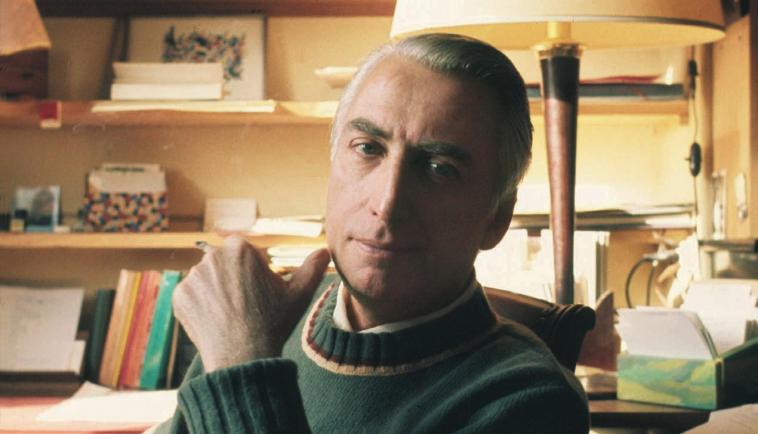
roland-barthes
Roland Barthes

What kind of academic journal is Barthes Studies?

Barthes Studies is an open-access online journal dedicated to the work of influential French literary and cultural theorist and critic Roland Barthes. It’s the only such journal in English (although there is an older French equivalent, the Revue Roland Barthes), and it was founded by Neil Badmington in 2015 with an issue that marked the centenary of Barthes’ birth. It’s interdisciplinary, has published articles by those working in French studies, English studies, literary theory, and cultural theory, and is open to those working in any area that has to do with Barthes. Because of the breadth and variety of his interests and writings, this is a very wide remit indeed!

What inspired you to oversee an issue devoted to the subject of poetry?

I think a few years ago, many people who are interested in Barthes, particularly in the UK, were seeing that there was a gap: it was commonly assumed that Barthes had something to say that was of relevance to poetry, and perhaps experimental poetry in particular, but why had so little been written about Barthes and poetry? I looked at a lot of books about poetry and found that in the index they would have one or two references to Barthes, but that these would lead to passing references to his most famous ‘The Death of the Author’ – an essay we assumed all the poets and poetry critics were familiar with, but nobody wanted to seem to talk about why, or how they got that way. When I started my PhD at Cardiff’ in 2013, I was hoping to fill this gap. (more…)

James Peacock discusses how cultural and literary criticism can help us to unpack Brooklyn’s complex cultural history

How did you come to write Brooklyn Fictions?

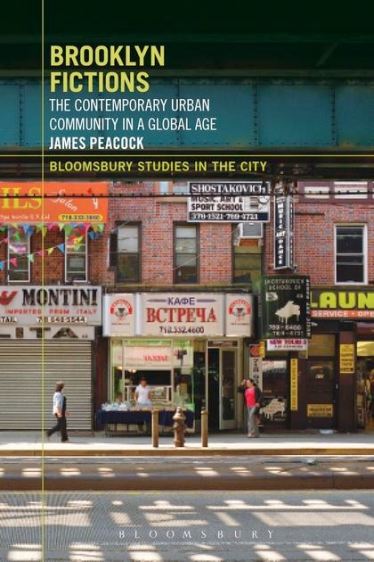
James Peacock, Brooklyn Fictions: The Contemporary Urban Community in a Global Age (Bloomsbury, 2016).

There are two strands to this answer – three, if I’m being really honest. First, it evolved quite organically from my previous research on Paul Auster and Jonathan Lethem – both contemporary writers strongly associated with the borough. Having written articles and monographs on them which explored, at least in part, their representations of Brooklyn neighbourhoods, it made sense to embark on a multi-author project which dug more deeply into these representations. Looking at my research as a whole, I realise that the importance of place and the relationship between the individual and the community have been connecting themes. The second inspiration for the project was more personal. While I was studying for my Ph.D., my wife and I lived in Leith. Once a separate town, now part of Edinburgh, Leith retains a fiercely independent streak and a sense of identity in opposition to the fancier city up the road. Even though it has been undergoing gentrification for many years, and despite the fact that it has Michelin-starred restaurants and some very expensive new apartments, Leith still values a down-home, honest authenticity many of its residents feel the centre does not have. When I began to understand that the relationship between Brooklyn and Manhattan was very similar, I saw some wider potential in writing about these ideological constructions, with Brooklyn as a suitable case study. Thirdly – and here’s the confessional moment – I visited New York City for the first time in 2005 and (though it’s not very original to say this) fell in love with it. I cannot deny that a research project which might take me there a few times was an attractive prospect. (more…)

How the practice of criticism can offer a way to rethink our assumptions about truth, history, and human nature

What exactly do we mean by the term ‘criticism’?

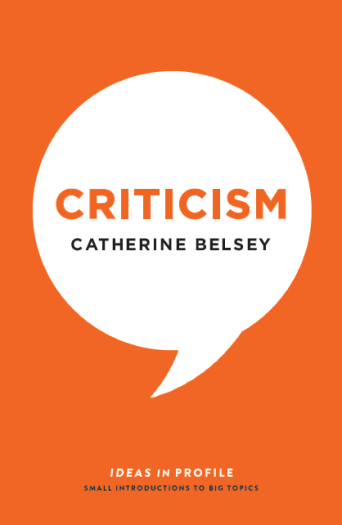
Catherine Belsey, Criticism (Profile Books, 2016)

The publishers asked me that and I didn’t give them an answer! It’s a fair question but I’m uneasy about definitions. They’re a bit like written constitutions: they tie you down and exclude new possibilities. Definitions demarcate a legitimate area of activity – and close off other options.

In a general way, criticism is reflection on the stories, plays and poems we read (or see, or listen to). But in detail, it varies. For some people, it’s effectively a source of consumer advice: this film is worth going to; that novel is worth buying. Others might prefer to think about what differentiates genres, or the effects of different media. Does a play tell a story in the same way as a novel? Do novels tend to works as films, say?

Then there’s fiction as a record of the way we think about the world, or our ancestors once thought about it. Criticism offers access to cultural analysis and cultural history.

My own current preoccupation is pleasure. Why is fiction so enjoyable, even when the stories it tells are unhappy ones? Why does tragedy attract audiences? Other people have other concerns: it can all be criticism. (more…)

To celebrate the birthday of Fyodor Dostoevsky, I speak to film and television actress Vera Graziadei about her acclaimed one-woman performance of one of his most overlooked works

What first attracted you to Dostoevsky’s work?

Promotional image for Alexander Markov's production of Nameless Nobody, starring Vera Graziadei
Promotional image for Alexander Markov’s production of Nameless Nobody, starring Vera Graziadei

Nietzsche once said that Dostoevsky was “the only person who has ever taught me anything about psychology.” I became obsessed with Dostoevsky’s work during my early twenties when I read The Idiot, a masterpiece which became for me not only a source of psychological insight, but also of philosophical thought and spirituality – my other passions, aside from theatre and literature. He is one of those rare writers whose influence extends far beyond his immediate discipline.

It was fascinating for me as a student of Empiricist philosophy, who was dissatisfied with the rational positivist approach taught to me at LSE [London School of Economics and Political Science], to dwell on the “Shakespeare of the lunatic asylum”, and have a chance to explore the darker and more irrational sides of human nature. It was a revelation to realise that Dostoevsky’s philosophical thought is at the root of Existentialism, a branch of philosophy that resonates with me very strongly. And to find out that most existentialist thinkers, including Sarte and Camus, have at some stage addressed the issues raised by Fyodor Mihailovich. (more…)