
Emilie Morin’s recent book sheds light on Beckett’s engagement with cultural and political issues
Emilie Morin, Beckett’s Political Imagination (Cambridge University Press, 2017)

Could you tell me a little bit about yourself and your research interests?

My research revolves around modernism and post-1945 literature, and the essays and books that I have published on Beckett’s work explore its relation to politics, its historical dimensions, and its Irish and European influences. I have been working in the Department of English at the University of York for over ten years.

How did you first encounter Samuel Beckett’s writing?

I must have been about fifteen, I think, when I first heard about Beckett. A friend of mine told me about a play that she had seen in which two actors were trapped in rubbish bins, and I was intrigued! Soon after I came across copies of the early absurdist plays, in the lovely Editions de Minuit versions. I was particularly struck by Oh les beaux jours, with its memorable cover featuring Madeleine Renaud stoically holding her umbrella.

livre_galerie_2707300551-Oh les beaux jours-beckett-happy daysIt seemed to me remarkable that a whole play could be made to unfold from that situation, from that image. The author was of no concern to me then, but from that first reading I recall being convinced that the work dealt with colonialism and with colonial wars, and I remember seeing a very literal political dimension within it. The French texts have a peculiar texture; they refract much of what is unsaid about colonial history, and much of what is culturally unsayable about historical injustice, and I was sensitive to that. These were powerful impressions, which stayed with me thereafter. When I began to study Beckett’s work properly, many years later, I did so in light of its Irish literary and historical contexts, and my first monograph was a reappraisal of Beckett’s relation to Ireland. For me, the work is never abstract: it is inseparable from war memory and from the long colonial histories that it invokes. In a sense, this new book was a return to my first impressions: when I started researching, I worked on what is now the final chapter on Beckett and the Algerian War of Independence. (more…)
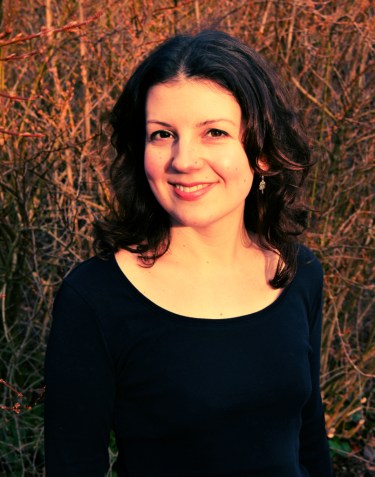
As her debut collection draws both popular and critical acclaim, I caught up with Emily Blewitt to talk about poetry, labels, and contemporary women’s writing
emily-blewitt
Emily Blewitt. Photograph: Michael Willett

When did you begin writing?

On one hand, the answer to this question is: since I could write. I was always writing stories when I was a little girl. And reading – I was a very enthusiastic bookworm! I never intended to write poetry; I didn’t think I’d be able to, though I loved reading it. I didn’t see how I could write poetry; I didn’t know how to go about it. But when I was seventeen, for the first time I saw a contemporary poet in action. I heard Kate Clanchy perform her work, and she was brilliant. She showed me that poetry could be accessible, powerful, sexy, exciting. That was the seed, though I didn’t start writing poetry properly until my early twenties, after I signed up for some extra-curricular writing workshops during my Masters degree.

What is it about poetry that appeals to you? 

For me, poetry has an immediacy about it. It can speak to us forcibly and directly. It has truth (different from accuracy) and music to it. It can take us somewhere, and continue to do so, because it is so layered with possible meanings. It’s slight compared to, say, a novel, but it can pack a punch far above its weight. I love its rhythms, its urgency, its vitality, its power.  (more…)

As The Story Was Told (1996), a two-part documentary featuring interviews with authorised biographer James Knowlson, publishers John Calder and Barney Rosset, actress Billie Whitelaw, nephew Edward Beckett, and others. The documentary is notable, in part, for its glimpses of Beckett’s home in Paris and his country retreat in Ussy-sur-Marne.

Catherine Morley on editing a new collection of essays that explores the legacy of September 11 on modern and contemporary literature

We begin our conversation having marked the fifteenth anniversary of the September 11th terrorist attacks. What led you to put together this new essay collection?

I have been interested in way in which we have come to narrativise and conceptualise the September 11th terrorist attacks for some time now. They occurred shortly after I moved to the UK to start my doctoral studies. I remember, very vividly, standing before the window of a shop selling televisions and the image of the plane hitting the second tower. It seemed unreal, and indeed at the time many commentators noted that it seemed a moment designed for mass televisual consumption. I thought then that my watching this terrible image unfold across multiple screens seemed like something from a Don DeLillo novel. I remember writing a short diary piece about it at the time, how it reminded me of the Airborne Toxic Event in DeLillo’s White Noise. Since then, I have always been keen to see how novelists, dramatist and poets might approach representing something that seemed to defy representation by its vast scale. So, when offered the opportunity by Bloomsbury to put this volume together I jumped at the chance.

(more…)

Strayed’s memoir is a testament to the restorative power of art

In recent months I have become increasingly interested in writers who discuss nature and the wilderness in their work. I have been keeping a mental note of several writers to consider, and was trying to decide between J.A. Baker‘s landmark work The Peregrine, Robert MacFarlane‘s The Old Ways, or a selection of John Muir‘s writing about his time in the Sierra Nevada. Then I was reminded of a book that my wife had read the previous year, and decided to read the opening couple of pages to get a sense of the prose. The book was Cheryl Strayed‘s memoir, Wild, and I was hooked. (more…)

On pursuing a vocation in art, writing, and simple living

The reasons for my decision

Back in June, I attended a cardiology appointment that had a profound impact on me. My meeting with the cardiologist was routine and I did not receive any alarming news, but I became aware of the fragility of my own body in a new way. As an infant I was diagnosed with a congenital heart condition, and my life had been saved by the UK’s National Health Service and the surgeons at Great Ormond Street Hospital in London. I have always felt grateful for the life-saving help that I received, and could talk superficially about my condition with friends and loved ones, but now I see that I was also prone to a form of denial. Throughout my adolescence and early adulthood I placed my heart condition to one side as I tried to establish an identity for myself. My routine appointments continued from year to year, but in my conscious mind and my behaviour I aimed to suppress what they represented with denial and distraction. This year marks the first time that I am fully and consciously aware that I have a congenital heart condition. And while there is no reason why I cannot live a full and happy life, I am now awake to the fact that I nearly didn’t survive infancy.

(more…)