Robert Cohen on co-editing a new anthology where established writers discuss their practice and vocation
The Writer's Reader: Vocation, Preparation, Creation, eds. Robert Cohen and Jay Parini (Bloomsbury, 2017).
The Writer’s Reader: Vocation, Preparation, Creation, eds. Robert Cohen and Jay Parini (Bloomsbury, 2017).

How did you come to put together The Writer’s Reader?

[Jay Parini, my co-editor, and I] both taught workshops for emerging writers — here at Middlebury, at the Bread Loaf Writers Conference, at Iowa and Harvard and elsewhere — for more years than we care to think about, and all that time we’ve been Xeroxing certain essays we love, essays that seem particularly well-suited to providing consolation, instruction, and the muscle of inspiration, not just to the small-w aspect of the practice but to the larger, more long-term, capital-W sense as well. At a certain point it became almost physically painful, not having these essays between covers (especially the ones out of print), not being able to share them in an easy, accessible way. It just seemed somehow stupid and wrong that there was no way to introduce a new generation of writers to Natalia Ginzburg’s piece, say, or Tillie Olsen’s, or Ted Solotaroff’s, or Danilo Kis’ — to name just three of the wiser, more over-arching essays about the writer’s life you’re ever likely to find. (more…)

Lorraine Sim discusses how the women of modernism allow us to reimagine the ordinary and the everyday
Lorraine Sim, Ordinary Matters: Modernist Women's Literature and Photography (Bloomsbury, 2016)
Lorraine Sim, Ordinary Matters: Modernist Women’s Literature and Photography (Bloomsbury, 2016)

What inspired you to write Ordinary Matters?

The idea developed from my first book, Virginia Woolf: the Patterns of Ordinary Experience. Towards the end of that project I realised there was much more that I wanted to explore, both in terms of the concept of the everyday and its applications to modernism and cultural histories of early twentieth-century modernity. I remember reading H.D.’s fascinating wartime memoir, The Gift, while I was working on my book on Woolf, and seeing some of Lee Miller’s photographs of London during the Blitz around the same time, and I felt I needed to extend my exploration of the ordinary to a broader range of women writers, artists and contexts. The final chapter of Virginia Woolf looked at what I termed the ‘ethics of the ordinary’ in her oeuvre. This idea, of the ways in which the ordinary functions as a site of value (be it personal, social, moral or political), really fascinated me, and I wanted to explore it in a more comprehensive way. Also, many canonical and contemporary theories on the topic view the everyday negatively, or as requiring radical transformation, and I felt that this was a critical habit or commonplace that itself required interrogation. (more…)

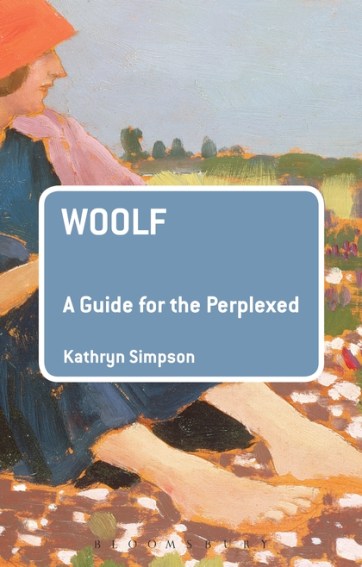
Kathryn Simpson discusses the life and work of one of literary modernism’s most distinguished innovators
Kathryn Simpson, Woolf: A Guide for the Perplexed (Bloomsbury, 2016)

What motivated you to write Woolf: A Guide for the Perplexed?

I feel very passionate about the work of Virginia Woolf because of the ways it engages with some of the ‘big’ questions about self and identity, experience and relationships, politics, cultural pressures and the impact of a changing world. She, like other modernist writers and artists, attempted to convey what it meant and felt like to live through a period of dramatic change (politically, socially, economically and in terms of technological developments) and to find new forms and techniques to represent a new sense of modernity.

How did you discover Virginia Woolf’s writing?

I discovered her writing as part of my undergraduate degree at the University of Birmingham and then chose to write on her work for my PhD alongside other early twentieth-century women writers (Gertrude Stein, H.D, Radclyffe Hall and Djuna Barnes). (more…)

David Lloyd talks about Beckett’s friendships with twentieth-century painters and his enduring interest in the visual arts
David Lloyd, Beckett's Thing: Painting and Theatre (Edinburgh University Press, 2016)
David Lloyd, Beckett’s Thing: Painting and Theatre (Edinburgh University Press, 2016)

What draws you to the work of Samuel Beckett?

I’ve been reading Beckett’s work since I was a teenager and writing on him since my undergraduate days at Cambridge in the 70s. I dare say part of my initial attraction to Beckett lay in the kinds of philosophical conundra his work posed, in its hilarious comedy and in its ascetic reductionism. In a letter to Georges Duthuit, in which he comments on his desire for “a theatre reduced to its own means”, he goes on: “That is Protestantism if you like, we are what we are.” It may be that there was also something about the South Dublin Protestant background that I shared with Beckett that felt like grounds for affinity: certainly there was something familiar as much in the ethos as in the local landscapes secreted in the works. But above all, it was the uncompromising aesthetic ethic, the commitment to a work determined to “reduce itself to its own means”, that corresponded to the refusal of extraneous resources like the resonances of identity or signifiers of cultural belonging. That offered a quite different set of possibilities, intellectually and aesthetically, than Irish culture at the time generally made available. (more…)

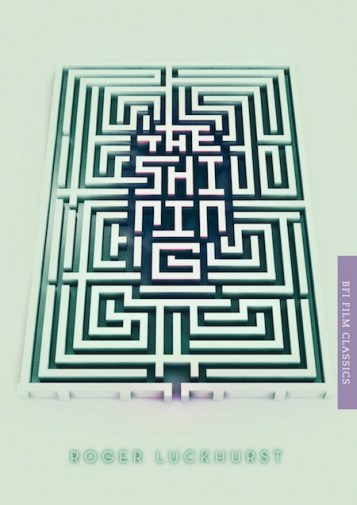
Roger Luckhurst offers a critical and entertaining survey of Kubrick’s horror masterpiece
Roger Luckhurst, The Shining (Palgrave, 2013).

In the thirty-seven years since its premiere, Stanley Kubrick’s The Shining (1980) has been the subject of heated debate. Based on a bestselling novel by Stephen King, the adaptation was dismissed by the author as ‘maddening, perverse, and disappointing’. His judgement was not unique. Critics and audiences alike found the film bewildering and strange, not knowing whether to take it as an art film or a low-brow horror shocker. Yet, as Roger Luckhurst points out in his excellent book, The Shining (BFI Classics, 2013), despite its chilly opening reception the film is now regarded as ‘one of the most admired horror films in cinema history’.

Luckhurst’s take on The Shining manages to pierce the lid on thirty years of critical discussion, and to yield a fresh perspective on one of cinema’s most discussed and perplexing films. The book addresses Stanley Kubrick’s status as a distinctive auteur filmmaker, but dismisses the tendency of critics to see deliberate intention in every move and gesture. Instead, Luckhurst reads The Shining within the broader cultural and historical context of late 1970s-early 1980s American culture. Insightful connections are made to films like The Amityville Horror (1979), The Omen (1976), Poltergeist and The Evil Dead (both released in 1982). Through its representation of prescient children, telepathy, and horror, Luckhurst reveals how The Shining expresses widely-held anxieties about traditional gender roles, the nuclear family, and histories of repressed trauma and violence. (more…)

Rachele Dini discusses how the work of J.G. Ballard, Don DeLillo, and Samuel Beckett engages with one of the most pressing environmental issues of our time
Rachele Dini, Consumerism, Waste, and Re-Use in Twentieth-Century Fiction (Palgrave, 2016)

What motivated you to write Consumerism, Waste, and Re-Use in Twentieth-Century Fiction?

Well, I’ve been attracted to remnants of different kinds since I was very little, and was obsessed with cutting up magazines as a teenager—but intellectually, the turning point for me was during my MA at King’s College London. I noticed almost immediately that the texts on the modules I was taking were unusually concerned with fragments and fragmentation. Dickens, Zola, Eliot, Elizabeth Bowen, Fernando Pessoa, Virginia Woolf, Ballard, Calvino, and of course Walter Benjamin and Adorno: physical and metaphorical waste proliferates in all of these authors’ work. In hindsight, this was to be expected since the course focused on the seismic effects of capitalist modernity, and waste is certainly one of these. But that focus on residual matter reproaching you for throwing it away, or on things not working and stuff falling apart, especially compelled me at the time, since it was the opposite in every way from the focus of my day job in market research. Market research is an industry essentially devoted to promoting the very things that leftist theory denounces: its modus operandi is to find ways of selling more. So the first spark for the PhD project that ultimately turned into this book was the conflict between the rhetoric of ‘harder, better, faster, stronger’ (to quote Daft Punk) I was accustomed to in my working life, and all of the countercultural—or simply denunciatory—writing I discovered through my studies, which called that rhetoric into question. (more…)

Autobiography is always negotiating two or more voices, speaking from separate and distinct moments in time. We can see this in what is perhaps the earliest example of modern autobiography, St Augustine‘s Confessions, where a present-day narrator attempts to reconstruct a previous life. In this way, autobiographical writing attempts to collapse the distance between childhood and adulthood, innocence and experience, and past and present.  (more…)