Robert Thacker discusses the life and work of the Canadian Nobel laureate

alicemunro-robertthacker-hateshipfriendshipcourtshiploveshipmarriage-runaway-dearlife-bloomsbury.jpgHow did you first come to encounter the work of Alice Munro?

I discovered Munro’s writing at a propitious moment in my own life and also, as it turned out, in hers. In 1973 I had just completed a B. A. at a university in my native Ohio, had decided to take a year off to explore graduate-school possibilities in Canada, and so had begun reading Canadian literature. At the suggestion of one of my mentors, I took out a subscription to the Tamarack Review, a quarterly focused on contemporary Canadian writing. The first story in the first issue I received—November 1973—was Munro’s “Material.” I read it, was struck hard by it, and became enraptured by her work right then—it is still among my favourite Munro stories. The next August I enrolled in an M.A. program at the University of Waterloo (Ontario) and, after coursework, presented a thesis on Munro’s narrative techniques in her uncollected stories and first book, Dance of the Happy Shades (1968). It was among the earliest critical studies of her stories, and I have been reading and analysing them ever since. (more…)

Will Brooker reflects on our continuing fascination with Gotham City’s caped crusader
Will Brooker, Batman Unmasked: Analyzing a Cultural Icon

What inspired you to write Batman Unmasked?

Batman Unmasked was originally my PhD thesis, One Life, Many Faces, and I began it over 20 years ago, so you can understand it is a fairly distant memory. My PhD plans began around 1994 as a study of masculinity in the mainstream cinema of the 1990s, and Batman was a small aspect of one proposed chapter, about the Gothic Masculine (Tim Burton’s films). I realised gradually that the idea of writing about Batman was what I was really looking forward to – at the time, the very concept was audacious in academic work – and the project evolved until that small part of one chapter expanded into the entire PhD. Of course, Batman is an interesting topic per se, but I felt personally invested in the character, and wanted to write about something I was really enthusiastic about, as a fan. That enthusiasm was important, as by the end of the three years full time of my doctorate, I hated Batman, PhDs and academia in general. (Those feelings passed). (more…)

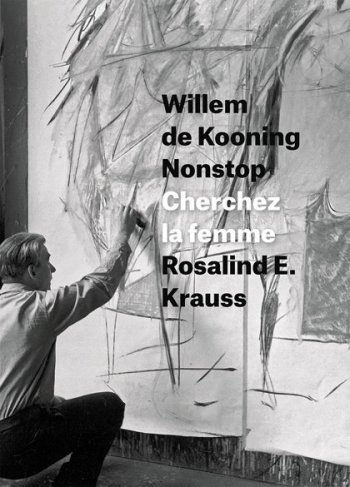
Rosalind E. Krauss talks about the life and work of the American abstract expressionist painter
Rosalind E. Krauss, Willem de Kooning Nonstop: Cherchez la femme (Columbia University Press, 2016)
Rosalind E. Krauss, Willem de Kooning Nonstop: Cherchez la femme (University of Chicago Press, 2016)

How did you first encounter Willem de Kooning’s paintings? What is it about his work that appeals to you?

The Phillips Collection in Washington D. C. has a particularly beautiful de Kooning: Asheville, 1948. I was always fascinated by it but frustrated that I couldn’t articulate its effect on me. It made me want to look for other de Koonings and to read the literature on his work—initially that in Art News, such as Tom Hess’s “De Kooning Paints a Picture.”  I was disappointed by this literature which I found merely effusive rather than analytical.

What motivated you to write a book about his work?

I had written my senior thesis on de Kooning at Wellesley College; then, when I saw the 2011 MoMA retrospective, curated by John Elderfield, I felt I had things to say about the paintings that no one had expressed before. (more…)

Calum Gardner talks about editing a special edition of Barthes Studies exploring the writer’s relationship to poetry
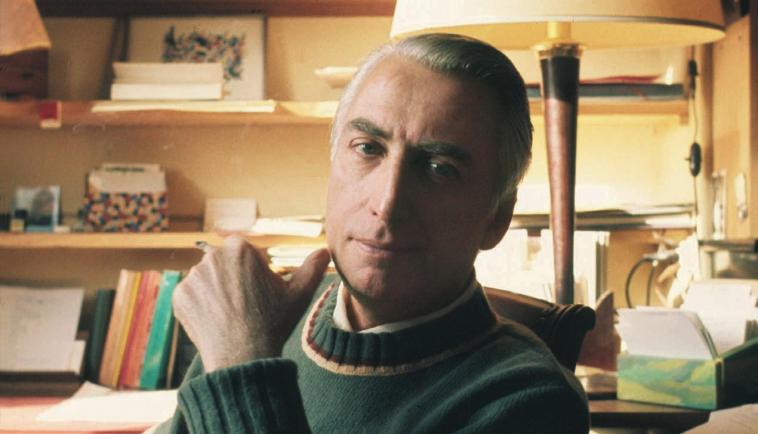
roland-barthes
Roland Barthes

What kind of academic journal is Barthes Studies?

Barthes Studies is an open-access online journal dedicated to the work of influential French literary and cultural theorist and critic Roland Barthes. It’s the only such journal in English (although there is an older French equivalent, the Revue Roland Barthes), and it was founded by Neil Badmington in 2015 with an issue that marked the centenary of Barthes’ birth. It’s interdisciplinary, has published articles by those working in French studies, English studies, literary theory, and cultural theory, and is open to those working in any area that has to do with Barthes. Because of the breadth and variety of his interests and writings, this is a very wide remit indeed!

What inspired you to oversee an issue devoted to the subject of poetry?

I think a few years ago, many people who are interested in Barthes, particularly in the UK, were seeing that there was a gap: it was commonly assumed that Barthes had something to say that was of relevance to poetry, and perhaps experimental poetry in particular, but why had so little been written about Barthes and poetry? I looked at a lot of books about poetry and found that in the index they would have one or two references to Barthes, but that these would lead to passing references to his most famous ‘The Death of the Author’ – an essay we assumed all the poets and poetry critics were familiar with, but nobody wanted to seem to talk about why, or how they got that way. When I started my PhD at Cardiff’ in 2013, I was hoping to fill this gap. (more…)

James Peacock discusses how cultural and literary criticism can help us to unpack Brooklyn’s complex cultural history

How did you come to write Brooklyn Fictions?

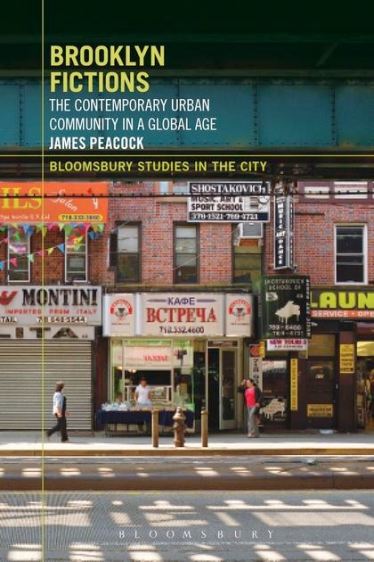
James Peacock, Brooklyn Fictions: The Contemporary Urban Community in a Global Age (Bloomsbury, 2016).

There are two strands to this answer – three, if I’m being really honest. First, it evolved quite organically from my previous research on Paul Auster and Jonathan Lethem – both contemporary writers strongly associated with the borough. Having written articles and monographs on them which explored, at least in part, their representations of Brooklyn neighbourhoods, it made sense to embark on a multi-author project which dug more deeply into these representations. Looking at my research as a whole, I realise that the importance of place and the relationship between the individual and the community have been connecting themes. The second inspiration for the project was more personal. While I was studying for my Ph.D., my wife and I lived in Leith. Once a separate town, now part of Edinburgh, Leith retains a fiercely independent streak and a sense of identity in opposition to the fancier city up the road. Even though it has been undergoing gentrification for many years, and despite the fact that it has Michelin-starred restaurants and some very expensive new apartments, Leith still values a down-home, honest authenticity many of its residents feel the centre does not have. When I began to understand that the relationship between Brooklyn and Manhattan was very similar, I saw some wider potential in writing about these ideological constructions, with Brooklyn as a suitable case study. Thirdly – and here’s the confessional moment – I visited New York City for the first time in 2005 and (though it’s not very original to say this) fell in love with it. I cannot deny that a research project which might take me there a few times was an attractive prospect. (more…)

Carolyn Cocca discusses how women superheroes are changing the we way think about contemporary femininity

What motivated you to write Superwomen?

carolyn-cocca-superwomen-gender-power-representation
Carolyn Cocca, Superwomen: Gender, Power, and Representation (Bloomsbury, 2016)

As a kid, my three male neighbors and I would play “superheroes.” I was always “the girl,” whether that was Wonder Woman, or Princess Leia, or whoever, while the guys got to choose from among many characters. As I got older it still seemed that female characters were much less numerous than the male characters and were more sexualized than the male characters, and usually have weaker powers and less interesting stories. So I decided to formally apply my political science and gender studies training to this issue and found that what I felt growing up is true not only about superheroes but also about the way women are portrayed across fiction–they are portrayed much less often, with much less nuance, and with much less power. There has been some change over time, but not very much. So Superwomen investigates how and why this is the case. (more…)

How the practice of criticism can offer a way to rethink our assumptions about truth, history, and human nature

What exactly do we mean by the term ‘criticism’?

Catherine Belsey, Criticism (Profile Books, 2016)

The publishers asked me that and I didn’t give them an answer! It’s a fair question but I’m uneasy about definitions. They’re a bit like written constitutions: they tie you down and exclude new possibilities. Definitions demarcate a legitimate area of activity – and close off other options.

In a general way, criticism is reflection on the stories, plays and poems we read (or see, or listen to). But in detail, it varies. For some people, it’s effectively a source of consumer advice: this film is worth going to; that novel is worth buying. Others might prefer to think about what differentiates genres, or the effects of different media. Does a play tell a story in the same way as a novel? Do novels tend to works as films, say?

Then there’s fiction as a record of the way we think about the world, or our ancestors once thought about it. Criticism offers access to cultural analysis and cultural history.

My own current preoccupation is pleasure. Why is fiction so enjoyable, even when the stories it tells are unhappy ones? Why does tragedy attract audiences? Other people have other concerns: it can all be criticism. (more…)