Leo Tolstoy
Leo Tolstoy

I have a new routine. Since finishing my duties at the university where I work, I have been dividing my time between applying for full-time academic posts and working on a manuscript for Ibidem’s Samuel Beckett in Company series.

I rise early and prepare myself a light breakfast with a cup of green tea. I check the news headlines with a sense of stoic resignation. And then I spend some time reading and writing. After finishing Stephen King‘s The Stand a week or two ago I moved on to William Peter Blatty‘s notorious novel, The Exorcist, and then found myself completing Georges Bernanos‘ excellent Diary of a Country Priest.

Yesterday morning, I restlessly searched among my books for another novel to read. Something that might pique my interest. As someone with a tendency to collect books, there is never a shortage of titles to choose from. Among the contenders were Émile Zola‘s Germinal, and both of Gustave Flaubert‘s novels, Madame Bovary and Sentimental Education. But I stopped on Leo Tolstoy‘s Anna Karenina. I am an avid reader of Tolstoy and Dostoevsky, but have never read Anna Karenina before. Somewhat ridiculously, I own two translations of the novel: the recent Pevear and Volokhonsky edition that drew critical attention and acclaim, and a 1912 translation by Louise and Aylmer Maude. According to my Everyman’s Library edition, the latter were a Quaker couple that befriended Tolstoy while living in Russia, and helped him organise the Doukhobor migration to Canada in 1893. I also find in their short biography that they “share[d] many of Tolstoy’s views on spiritual life, moral obligation, and passive resistance to violence”. I picked up the Louise and Aylmer Maude translation and began reading. (more…)

Robert Cohen on co-editing a new anthology where established writers discuss their practice and vocation
The Writer's Reader: Vocation, Preparation, Creation, eds. Robert Cohen and Jay Parini (Bloomsbury, 2017).
The Writer’s Reader: Vocation, Preparation, Creation, eds. Robert Cohen and Jay Parini (Bloomsbury, 2017).

How did you come to put together The Writer’s Reader?

[Jay Parini, my co-editor, and I] both taught workshops for emerging writers — here at Middlebury, at the Bread Loaf Writers Conference, at Iowa and Harvard and elsewhere — for more years than we care to think about, and all that time we’ve been Xeroxing certain essays we love, essays that seem particularly well-suited to providing consolation, instruction, and the muscle of inspiration, not just to the small-w aspect of the practice but to the larger, more long-term, capital-W sense as well. At a certain point it became almost physically painful, not having these essays between covers (especially the ones out of print), not being able to share them in an easy, accessible way. It just seemed somehow stupid and wrong that there was no way to introduce a new generation of writers to Natalia Ginzburg’s piece, say, or Tillie Olsen’s, or Ted Solotaroff’s, or Danilo Kis’ — to name just three of the wiser, more over-arching essays about the writer’s life you’re ever likely to find. (more…)

Lorraine Sim discusses how the women of modernism allow us to reimagine the ordinary and the everyday
Lorraine Sim, Ordinary Matters: Modernist Women's Literature and Photography (Bloomsbury, 2016)
Lorraine Sim, Ordinary Matters: Modernist Women’s Literature and Photography (Bloomsbury, 2016)

What inspired you to write Ordinary Matters?

The idea developed from my first book, Virginia Woolf: the Patterns of Ordinary Experience. Towards the end of that project I realised there was much more that I wanted to explore, both in terms of the concept of the everyday and its applications to modernism and cultural histories of early twentieth-century modernity. I remember reading H.D.’s fascinating wartime memoir, The Gift, while I was working on my book on Woolf, and seeing some of Lee Miller’s photographs of London during the Blitz around the same time, and I felt I needed to extend my exploration of the ordinary to a broader range of women writers, artists and contexts. The final chapter of Virginia Woolf looked at what I termed the ‘ethics of the ordinary’ in her oeuvre. This idea, of the ways in which the ordinary functions as a site of value (be it personal, social, moral or political), really fascinated me, and I wanted to explore it in a more comprehensive way. Also, many canonical and contemporary theories on the topic view the everyday negatively, or as requiring radical transformation, and I felt that this was a critical habit or commonplace that itself required interrogation. (more…)

Robert Doran examines how critical theory has always been a form of ethical practice
Robert Doran, The Ethics of Theory: Philosophy, History, Literature (Bloomsbury, 2016)

What led you to write The Ethics of Theory?

The impetus for this project was a feeling that the tectonic shift of Theory–from a hermetic-textualist to a culturally-focused and politically-driven discourse–had not really been examined. This shift (circa 1987) was simply accepted, celebrated, or lamented without any real thinking about how we got from here to there or from there to here. Thus, I wanted to reflect on how this transformation happened and what it means for us now.

What do you think is the biggest misconception people have about critical theory?

That it is definable in terms of some general consensus, that there is some general agreement about what it is and what role it should play, when in fact it embodies many competing and at times mutually exclusive paradigms and assumptions. Nevertheless, I think that what binds everyone (or most everyone) together under the Theory banner is the sense that Nietzsche’s challenge to philosophy (continued and amplified by Heidegger) represented a fundamental break in the intellectual history of the West. On the one side, Nietzsche contested the hegemony of scientific inquiry, which, in the late nineteenth century, had attained great cultural prestige, displacing philosophy’s traditional role as the arbiter of knowledge. On the other side, Nietzsche held that human beings make their own truth–or decide what counts as truth–and that all knowledge is therefore contingent on human projects. The concept of objective, value-neutral knowledge is thereby torn asunder, giving way to the idea that seemingly “objective” knowledge is permeated with social, ethical, and political considerations that can never be completely expunged. The role of Theory or Critical Theory is to keep pointing this out. (more…)

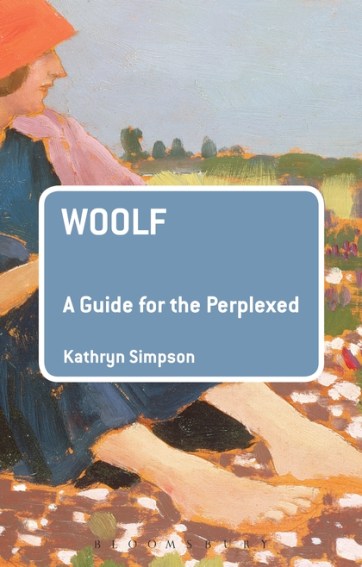
Kathryn Simpson discusses the life and work of one of literary modernism’s most distinguished innovators
Kathryn Simpson, Woolf: A Guide for the Perplexed (Bloomsbury, 2016)

What motivated you to write Woolf: A Guide for the Perplexed?

I feel very passionate about the work of Virginia Woolf because of the ways it engages with some of the ‘big’ questions about self and identity, experience and relationships, politics, cultural pressures and the impact of a changing world. She, like other modernist writers and artists, attempted to convey what it meant and felt like to live through a period of dramatic change (politically, socially, economically and in terms of technological developments) and to find new forms and techniques to represent a new sense of modernity.

How did you discover Virginia Woolf’s writing?

I discovered her writing as part of my undergraduate degree at the University of Birmingham and then chose to write on her work for my PhD alongside other early twentieth-century women writers (Gertrude Stein, H.D, Radclyffe Hall and Djuna Barnes). (more…)

David Lloyd talks about Beckett’s friendships with twentieth-century painters and his enduring interest in the visual arts
David Lloyd, Beckett's Thing: Painting and Theatre (Edinburgh University Press, 2016)
David Lloyd, Beckett’s Thing: Painting and Theatre (Edinburgh University Press, 2016)

What draws you to the work of Samuel Beckett?

I’ve been reading Beckett’s work since I was a teenager and writing on him since my undergraduate days at Cambridge in the 70s. I dare say part of my initial attraction to Beckett lay in the kinds of philosophical conundra his work posed, in its hilarious comedy and in its ascetic reductionism. In a letter to Georges Duthuit, in which he comments on his desire for “a theatre reduced to its own means”, he goes on: “That is Protestantism if you like, we are what we are.” It may be that there was also something about the South Dublin Protestant background that I shared with Beckett that felt like grounds for affinity: certainly there was something familiar as much in the ethos as in the local landscapes secreted in the works. But above all, it was the uncompromising aesthetic ethic, the commitment to a work determined to “reduce itself to its own means”, that corresponded to the refusal of extraneous resources like the resonances of identity or signifiers of cultural belonging. That offered a quite different set of possibilities, intellectually and aesthetically, than Irish culture at the time generally made available. (more…)

Roger Luckhurst offers a critical and entertaining survey of Kubrick’s horror masterpiece
Roger Luckhurst, The Shining (Palgrave, 2013).

In the thirty-seven years since its premiere, Stanley Kubrick’s The Shining (1980) has been the subject of heated debate. Based on a bestselling novel by Stephen King, the adaptation was dismissed by the author as ‘maddening, perverse, and disappointing’. His judgement was not unique. Critics and audiences alike found the film bewildering and strange, not knowing whether to take it as an art film or a low-brow horror shocker. Yet, as Roger Luckhurst points out in his excellent book, The Shining (BFI Classics, 2013), despite its chilly opening reception the film is now regarded as ‘one of the most admired horror films in cinema history’.

Luckhurst’s take on The Shining manages to pierce the lid on thirty years of critical discussion, and to yield a fresh perspective on one of cinema’s most discussed and perplexing films. The book addresses Stanley Kubrick’s status as a distinctive auteur filmmaker, but dismisses the tendency of critics to see deliberate intention in every move and gesture. Instead, Luckhurst reads The Shining within the broader cultural and historical context of late 1970s-early 1980s American culture. Insightful connections are made to films like The Amityville Horror (1979), The Omen (1976), Poltergeist and The Evil Dead (both released in 1982). Through its representation of prescient children, telepathy, and horror, Luckhurst reveals how The Shining expresses widely-held anxieties about traditional gender roles, the nuclear family, and histories of repressed trauma and violence. (more…)