
A short passage from this morning’s Office of Readings in the Breviary (Friday, Week 10 of Ordinary Time):

“It is medicine for our spiritual health. Whoever reads it will find in it a medicine to cure the wounds caused by his own particular passions. Whoever studies it deeply will find it a kind of gymnasium open for all souls to use, where the different psalms are like different exercises set out before him. In that gymnasium, in that stadium of virtue, he can choose the exercises that will train him best to win the victor’s crown.

If someone wants to study the deeds of our ancestors and imitate the best of them, he can find a single psalm that contains the whole of their history, a complete treasury of past memories in just one short reading.”

— From the discourses of St Ambrose on the Psalms
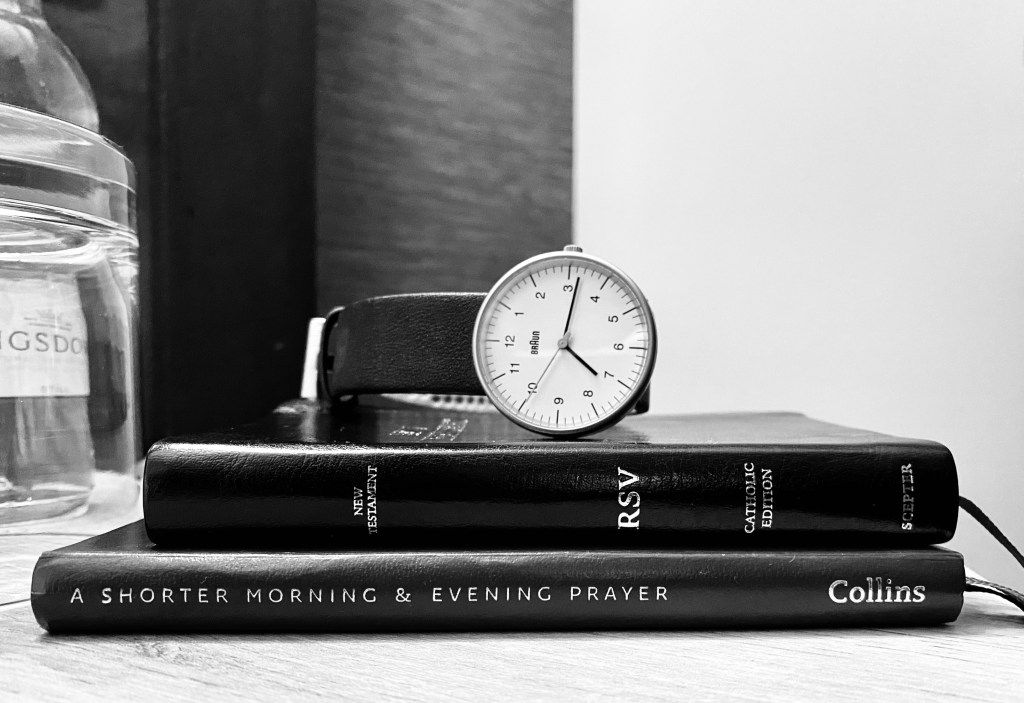
A quiet evening reading from Tanquerey’s The Spiritual Life, first published in 1923:

“[The Psalter] is the most excellent of Prayer-books wherein we find in a language that always lives and never grows old, the most beautiful expressions of admiration, adoration, filial reverence, gratitude and love, together with the most ardent supplications, midst situations the most varied and trying […] To read and reread them, to ponder them and make their sentiments our own is surely a highly sanctifying occupation.”

Adolphe Tanquerey, The Spiritual Life: A Treatise on Ascetical and Mystical Theology

Corresponding from distant Paris, Fr Huvelin offers spiritual advice to St Charles de Foucauld as he works as a gardener in Nazareth:

“Nourish yourself on the Psalms, which give such vivid expression to the feelings that feed the soul united to God or in search of him.”

— 13 May 1897, qtd. in Jean-Jacques Antier, Charles de Foucauld