
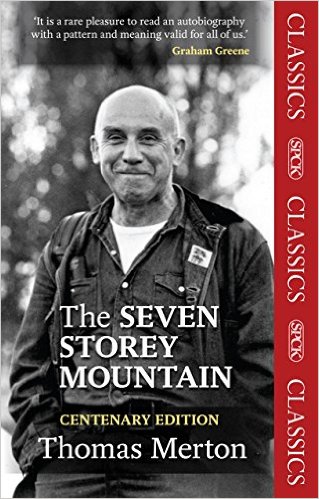
Spent yesterday evening reading Thomas Merton‘s autobiography, The Seven Storey Mountain. Still a young man, he has lost his mother and his father to illness. With no fixed home, he moved from his birthplace in France to America, then back to France, then to England, and now to America. His attention to detail is wonderful, whether describing middle-class English life or American cinemagoers enjoying Charlie Chaplin‘s Modern Times. He is becoming increasingly disillusioned with his literary career, and there are early signs that he will consider monastic life. I’m looking forward to returning to the book as soon as I can: rich in everyday details, it’s a remarkable document of early-twentieth-century life.
I am becoming increasingly fascinated with life writing for its potential to blend historical record, philosophical observation, and literary style. I’m thinking here not only of Merton, but figures like St Augustine, Henri Amiel, and one of my all-time favourites, Jules Renard. Samuel Beckett‘s poignant and dryly humorous letters have a similar quality.
In a recent interview with Neil Badmington, I was reminded of the profound power and solace that that life writing can provide. Badmington reveals that ‘The Mourning Diary is the posthumous text by Barthes to which I return more than any other. Every time I revisit it, I’m struck by the desperate, impossible tension in its brief sighs of sorrow’.

 RhysTranter.com