A new short story collection from NYRB celebrates what is enigmatic about everyday minutiae
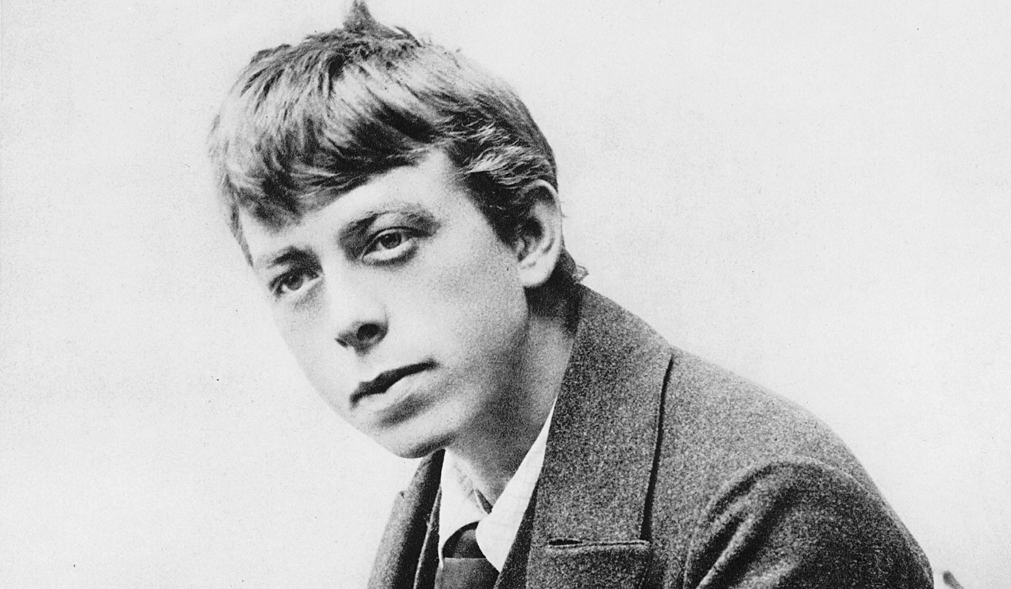
robert-walser
Robert Walser

Feuilleton. Traditionally, a ‘feuilleton’ is a portion at the bottom of a French newspaper that is kept free for light literature, criticism, and commentary. It derives from the word ‘feuille’, meaning ‘leaf’. By its very nature, the feuilleton is marginal and fragmentary. For the early twentieth-century author Robert Walser, this became an ideal medium for his wandering and ephemeral style.

The NYRB’s wonderful new collection of the Swiss writer’s short texts, entitled Girlfriends, Ghosts, and Other Stories, allows us to leaf through a life of extraordinary writing. The German writer and academic W. G. Sebald, using Walser’s own words, described him as a ‘clairvoyant of the small’, a writer of prose ‘at odds with the demands of high culture’. Tom Whalen’s afterword to the NYRB volume echoes this sentiment, recognizing in Walser a sensibility of ‘sovereign insignificance’. Whalen continues: ‘For the fueilletonist anything can be an occasion for a prose piece: a walk in the mountains, a new hairstyle, an old fountain, shopwindows, a kitten, a carousel, a Parisian newspaper’. As Walser drifts aimlessly through the modern European city, we share his curiosity and wonder at the small details of this strange and peculiar life.

(more…)
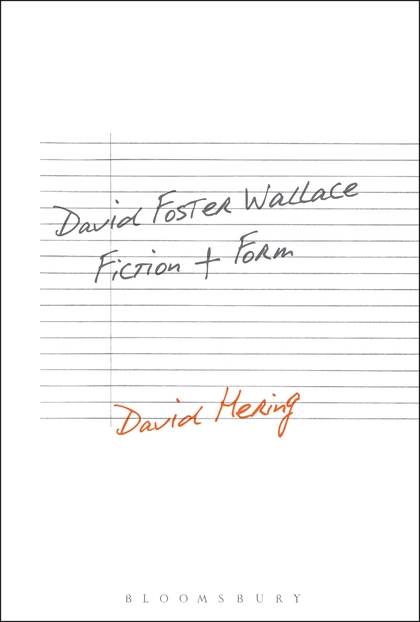
David Hering discusses how his new book led him to explore the Wallace archive

How did you discover David Foster Wallace’s work?

David Hering, David Foster Wallace: Fiction and Form (Bloomsbury, 2016)

I actually read his journalism first, before knowing who he was – I read his piece in Premiere on David Lynch back in 1997 when I was in my teens, and remember thinking that it was very good and idiosyncratic, but not remembering his name. He was not really a widely-known writer in the UK at that point. It was only when I found myself re-reading it in A Supposedly Fun Thing I’ll Never Do Again years later that I joined the dots. I first came to his fiction in the mid-2000s, shortly before I started my PhD. The first thing I read was Infinite Jest – I went through a phase of devouring these huge postmodern encyclopaedic novels, and that was one of them. By that point the name had been floating round in my peripheral vision for a good while, and I wanted to know what the fuss was about.

I was immediately – immediately – struck by it. Sometimes it takes a while for a big book to bed in before you really love it – I think Bolano’s 2666 is a case in point – but I distinctly remember that by the time I got to the first line of the second chapter of Infinite Jest (‘Where was the woman who said she’d come’) I thought “I’m in this until the end”. Which is very unusual, for me at least. I think I read the last 200 pages in a day. (more…)

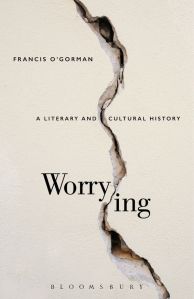
Francis O’Gorman describes how his tendency to worry led him to investigate its cultural and literary origins. We talk about Shakespeare, Sherlock Holmes stories, and the prominence of ‘worry’ in everyday life

Francis O'Gorman, Worrying: A Literary and Cultural History
Francis O’Gorman, Worrying: A Literary and Cultural History

What motivated you to write the book?

There’s a very short answer to that: I’m a worrier and I wanted to think about what that meant. Several people have asked me why a literary critic would write such a book, and whether I am merely using literature as a kind of case study, as representation. But for me being a literary critic means reading as intently and alertly as possible. And that includes, where necessary, reading the patterns of one’s own mind.

What exactly is ‘worry’, and why is it so difficult to pin down?

I don’t think that there is an ‘exactly’ in relation to worry. In the book, my topic is being fearful about the turn of ordinary things. Worry—those questions in the mind that mostly start with ‘what if …’—is a way of trying to take some control over a future that we don’t know but would like to. Worrying isn’t a ‘mental health’ book in that it doesn’t concern conditions of mind that would even vaguely interest a clinician. And I don’t write about grave worries—including worries about the grave. I’m interested, rather, in the mundane, in the meaning of low level bothers about what might happen next. (more…)

Christopher John Müller on his new book and his English translation of Günther Anders, a contemporary of Adorno, Benjamin, and Arendt

Günther Anders
Günther Anders

How did you come to discover the work of Günther Anders?

I was alerted to a translated essay from the 1930s called the ‘Pathology of Freedom’, whilst writing my PhD thesis in 2012. I had never heard of its author, Günther Stern, and was captivated by the work, a brilliant existential analysis of the experience of freedom.

When looking up the author, I was surprised to learn that he was connected to canonical authors and thinkers I liked to study – Stern (who assumed the pseudonym Anders) was the first husband of Hannah Arendt, a cousin of Walter Benjamin, a student of Husserl and Heidegger, friends with Ernst Bloch and Herbert Marcuse, and connected to Berthold Brecht, Georg Lukács, Literary Modernists, the Frankfurt School thinkers – the list goes on and on and on. (more…)

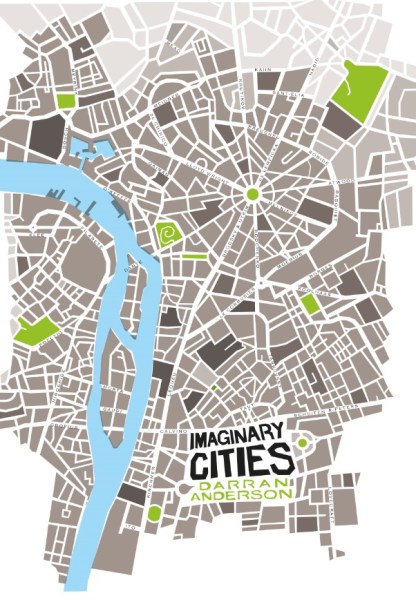
The author talks about his new book, his influences, and his fascination with modern urban spaces

What made you choose the title “Imaginary Cities”?

Darran Anderson, Imaginary Cities

I had more romantic or esoteric titles in mind but it had to be something simple to give, what is a fairly sprawling and extremely rambling text, a sense of coherence. I’ve always liked books with minimalist titles; The Castle, The Plague, Notes from Underground, The Tin Drum, The Lottery. They seem far more evocative to me than The Lighthouse-Keeper’s Daughter-type titles you see a lot. At the same time, my intention was to write something that isn’t self-contained; a book that somehow spills out of its pages and into the world. Reading Susan Sontag’s On Photography, I was initially frustrated that she hadn’t included the photographs she was writing about. Later I came to realise this was a godsend as it sends you out searching and you end up finding entire worlds you didn’t know about – Diane Arbus, Roman Vishniac, Weegee, Vivian Maier. I tried to do the same with Imaginary Cities. I wanted to send people out looking for Sant’Elia or Chernikhov or whoever. It would be as much a map as a book.   (more…)

Joseph Anderton’s compelling new study explores the role of creaturely life in Beckett’s post-war prose and drama

Joseph Anderton, Beckett's Creatures: Art of Failure After the Holocaust (Bloomsbury, 2016)
Joseph Anderton, Beckett’s Creatures: Art of Failure After the Holocaust (Bloomsbury, 2016)
In the immediate aftermath of the Second World War, Samuel Beckett volunteered with the Irish Red Cross on the European continent. With a strong grasp several languages, the writer was assigned the role of driver and translator in the devastated Normandy city of Saint-Lô. During this time, while still stationed in the city, Beckett submitted a record of his experiences to Ireland’s national broadcaster, Radio Telefis Éireann (RTÉ). It was entitled ‘The Capital of the Ruins’. This unaired report on a landscape of wounded civilian casualties and collapsed buildings is the starting point for Joseph Anderton’s compelling new study, Beckett’s Creatures: Art of Failure After the Holocaust. [Read More]

This is an excerpt from a review of Joseph Anderton’s Beckett’s Creatures: Art of Failure After the Holocaust (Bloomsbury, 2016), published in Studies in Theatre and Performance(October, 2016).

Why critics of the Nobel Committee’s nomination are missing the point

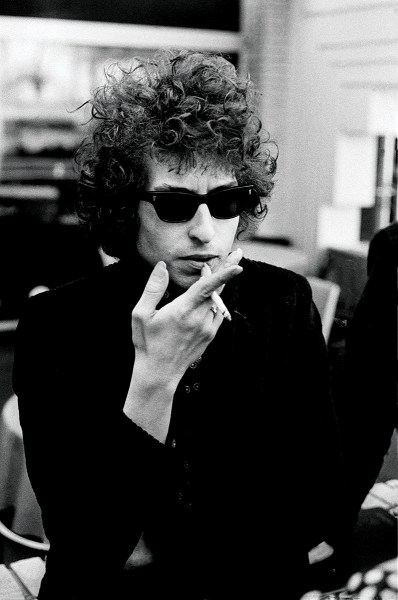
Bob Dylan in the 1960s.

On 13 October, I was surprised and delighted to hear that Bob Dylan was awarded the Nobel Prize for Literature. The Nobel Committee selected Dylan ‘for having created new poetic expressions within the great American song tradition’. Few would question the songwriter’s contribution to the cultural landscape of the twentieth-century. His albums for Columbia Records in the 1960s document a deep knowledge and respect for American folk music, blues music, and poetry; Dylan adapted and reworked these forms to forge a compelling picaresque of the post-war American landscape.

“[…] literature, when traced back to its earliest forms, began as a poetic oral tradition frequently linked to rhythm, music, and song.”

There have been some who have responded to Dylan’s Nobel nomination with dismay, even anger. Some cite that his status as a songwriter might justify a place in the Rock and Roll Hall of Fame, but is not a ticket into the literary canon. Such detractors often fail to acknowledge that in addition to his music, Bob Dylan has also published poetry, experimental prose, and even a memoir. That’s to say nothing of his influence on countless more traditional literary figures. But this kind of categorization seems to miss the point. Those who reject Dylan’s candidacy for the Nobel forget that literature, when traced back to its earliest forms, began as a poetic oral tradition frequently linked to rhythm, music, and song. (more…)