
To celebrate the birthday of Fyodor Dostoevsky, I speak to film and television actress Vera Graziadei about her acclaimed one-woman performance of one of his most overlooked works

What first attracted you to Dostoevsky’s work?

Promotional image for Alexander Markov's production of Nameless Nobody, starring Vera Graziadei
Promotional image for Alexander Markov’s production of Nameless Nobody, starring Vera Graziadei

Nietzsche once said that Dostoevsky was “the only person who has ever taught me anything about psychology.” I became obsessed with Dostoevsky’s work during my early twenties when I read The Idiot, a masterpiece which became for me not only a source of psychological insight, but also of philosophical thought and spirituality – my other passions, aside from theatre and literature. He is one of those rare writers whose influence extends far beyond his immediate discipline.

It was fascinating for me as a student of Empiricist philosophy, who was dissatisfied with the rational positivist approach taught to me at LSE [London School of Economics and Political Science], to dwell on the “Shakespeare of the lunatic asylum”, and have a chance to explore the darker and more irrational sides of human nature. It was a revelation to realise that Dostoevsky’s philosophical thought is at the root of Existentialism, a branch of philosophy that resonates with me very strongly. And to find out that most existentialist thinkers, including Sarte and Camus, have at some stage addressed the issues raised by Fyodor Mihailovich. (more…)
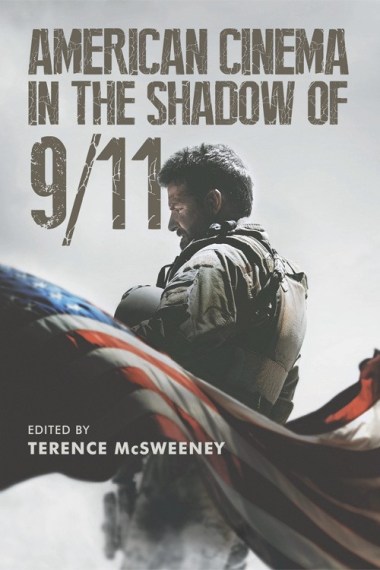
Terence McSweeney discusses a new collection of essays that explore the legacy of September 11th in recent film

We begin our conversation having marked the fifteenth anniversary of the September 11th terrorist attacks. The legacy of those events has had an inestimable effect on the cultural, historical, and ideological landscape. What do you think it means to say that we are living ‘in the shadow of 9/11’?

terence-mcsweeney-american-cinema-shadow-911-edinburgh-university-press
American Cinema in the Shadow of 9/11, edited by Terence McSweeney (EUP, 2016)

The title of the book is derived from this often repeated phrase “in the shadow of 9/11” which was one we heard very frequently during the turbulent first decade of the new millennium. Even though fifteen years have passed since September 11th 2001 we can clearly see how impactful the events of 9/11 and the ‘War on Terror’ still are on contemporary geo-politics. This is not to endorse that simplistic aphorism that “9/11 changed everything”, because it certainly did not, but what it and events after did was to provoke what we might describe as the shifting of ideological co-ordinates in a variety of ways: whether in terms of American foreign policy decisions or the considerable impact of what Jason Burke called “the 9/11 wars” on the body of films which have been produced by the American film industry since. It seems hard to deny that the ‘War on Terror’ is one of the most profoundly impactful cultural events of the last two decades and just as fears and anxieties concerning the Second World War and the cold war became materialised in novels, films and TV shows in their respective eras, so 9/11 and the ‘War on Terror’ can often be found within the frames of contemporary American film. (more…)

David Hering discusses how his new book led him to explore the Wallace archive

How did you discover David Foster Wallace’s work?

David Hering, David Foster Wallace: Fiction and Form (Bloomsbury, 2016)

I actually read his journalism first, before knowing who he was – I read his piece in Premiere on David Lynch back in 1997 when I was in my teens, and remember thinking that it was very good and idiosyncratic, but not remembering his name. He was not really a widely-known writer in the UK at that point. It was only when I found myself re-reading it in A Supposedly Fun Thing I’ll Never Do Again years later that I joined the dots. I first came to his fiction in the mid-2000s, shortly before I started my PhD. The first thing I read was Infinite Jest – I went through a phase of devouring these huge postmodern encyclopaedic novels, and that was one of them. By that point the name had been floating round in my peripheral vision for a good while, and I wanted to know what the fuss was about.

I was immediately – immediately – struck by it. Sometimes it takes a while for a big book to bed in before you really love it – I think Bolano’s 2666 is a case in point – but I distinctly remember that by the time I got to the first line of the second chapter of Infinite Jest (‘Where was the woman who said she’d come’) I thought “I’m in this until the end”. Which is very unusual, for me at least. I think I read the last 200 pages in a day. (more…)

Francis O’Gorman describes how his tendency to worry led him to investigate its cultural and literary origins. We talk about Shakespeare, Sherlock Holmes stories, and the prominence of ‘worry’ in everyday life
Francis O'Gorman, Worrying: A Literary and Cultural History
Francis O’Gorman, Worrying: A Literary and Cultural History

What motivated you to write the book?

There’s a very short answer to that: I’m a worrier and I wanted to think about what that meant. Several people have asked me why a literary critic would write such a book, and whether I am merely using literature as a kind of case study, as representation. But for me being a literary critic means reading as intently and alertly as possible. And that includes, where necessary, reading the patterns of one’s own mind.

What exactly is ‘worry’, and why is it so difficult to pin down?

I don’t think that there is an ‘exactly’ in relation to worry. In the book, my topic is being fearful about the turn of ordinary things. Worry—those questions in the mind that mostly start with ‘what if …’—is a way of trying to take some control over a future that we don’t know but would like to. Worrying isn’t a ‘mental health’ book in that it doesn’t concern conditions of mind that would even vaguely interest a clinician. And I don’t write about grave worries—including worries about the grave. I’m interested, rather, in the mundane, in the meaning of low level bothers about what might happen next. (more…)

A secret charity auction with contributions from major artists and emerging talent

Art on a Postcard raises money for The Hepatitis C Trust through an annual secret postcard auction and ‘postcard lotteries’ which occur throughout the year. In recent years, work has been donated from established artists such as Peter Blake, Damien Hirst, Harland Miller, Gavin Turk, Rachel Howard, Gilbert and George, Polly Morgan, John Wragg RA, Stephen Chambers RA, Micheal Craig-Martin and Cecily Brown and emerging talent such as David Shillinglaw, Hayden Kays and Daisy Cook as well as urban artists, Ben Eine, Pure Evil and Inkie and photographers Dougie Wallace and Rankin. The project was founded by Gemma Peppé.

“I’m delighted to be part of this year’s The Hepatitis C Trust’s Art on a Postcard Secret Auction. While the secret auction democratises art, funds raised will help The Trust in its work towards ridding the county of hepatitis C, a killer disease which disproportionally affects an underprivileged community.”

— Grayson Perry

I caught up with some of this year’s artists to ask them about their involvement with the cause, and how they met the challenge set by the project. (more…)

Christopher John Müller on his new book and his English translation of Günther Anders, a contemporary of Adorno, Benjamin, and Arendt
Günther Anders
Günther Anders

How did you come to discover the work of Günther Anders?

I was alerted to a translated essay from the 1930s called the ‘Pathology of Freedom’, whilst writing my PhD thesis in 2012. I had never heard of its author, Günther Stern, and was captivated by the work, a brilliant existential analysis of the experience of freedom.

When looking up the author, I was surprised to learn that he was connected to canonical authors and thinkers I liked to study – Stern (who assumed the pseudonym Anders) was the first husband of Hannah Arendt, a cousin of Walter Benjamin, a student of Husserl and Heidegger, friends with Ernst Bloch and Herbert Marcuse, and connected to Berthold Brecht, Georg Lukács, Literary Modernists, the Frankfurt School thinkers – the list goes on and on and on. (more…)

The author talks about his new book, his influences, and his fascination with modern urban spaces

What made you choose the title “Imaginary Cities”?

Darran Anderson, Imaginary Cities

I had more romantic or esoteric titles in mind but it had to be something simple to give, what is a fairly sprawling and extremely rambling text, a sense of coherence. I’ve always liked books with minimalist titles; The Castle, The Plague, Notes from Underground, The Tin Drum, The Lottery. They seem far more evocative to me than The Lighthouse-Keeper’s Daughter-type titles you see a lot. At the same time, my intention was to write something that isn’t self-contained; a book that somehow spills out of its pages and into the world. Reading Susan Sontag’s On Photography, I was initially frustrated that she hadn’t included the photographs she was writing about. Later I came to realise this was a godsend as it sends you out searching and you end up finding entire worlds you didn’t know about – Diane Arbus, Roman Vishniac, Weegee, Vivian Maier. I tried to do the same with Imaginary Cities. I wanted to send people out looking for Sant’Elia or Chernikhov or whoever. It would be as much a map as a book.   (more…)