


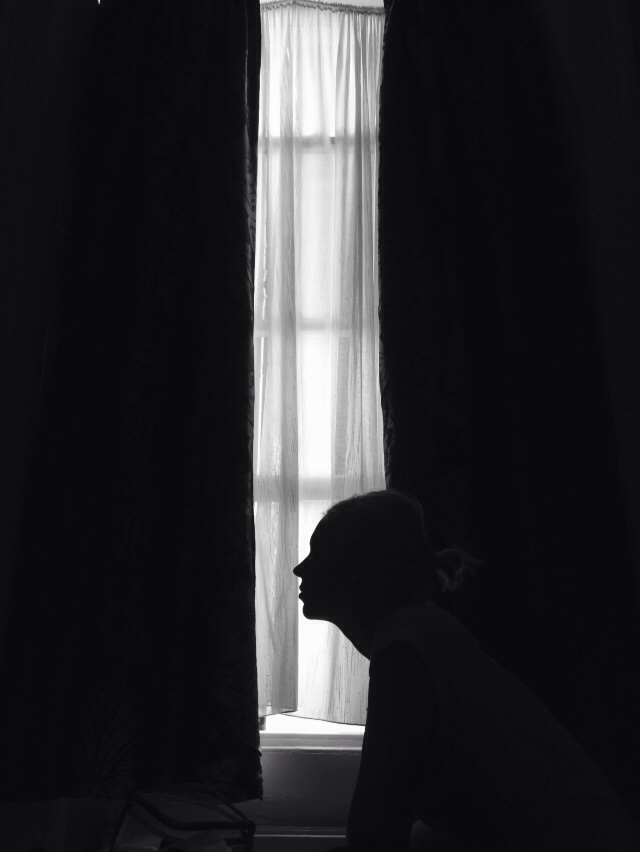
In these dark times
we look for the light.
In these dark times
we look for the light.


This week, it was my great privilege to visit the John Muir National Historic Site in Martinez, California. The beautiful Muir family home was restored from dereliction by the National Park Service, and pays tribute to the father of modern environmental conservation.
I rise at 6am, and spend the early hours writing, reading, and drinking hot tea.
I am reading Primo Levi’s The Truce, an account of his long journey home after the liberation of Auschwitz in 1945. The chemist has a close eye for detail, and describes people’s actions with clarity and economy. His work is relevant for its account (and analysis) of historical injustice, but feels more so during these times.
Experimenting with black and white photography, and pleased with the results. Since I capture images using a phone camera, quality can be a concern in poor weather or dim lighting. But I find that in black and white photography these conditions are not a hindrance, but work to one’s advantage. The results are always interesting and sometimes beautiful. A dark and blurry portrait resembles a canvas painted with broad strokes.
There is a juvenile Eurasian coot living in a nearby canal. It was born much later than the others, and its family has not yet flown south for the winter.
Back in June, I attended a cardiology appointment that had a profound impact on me. My meeting with the cardiologist was routine and I did not receive any alarming news, but I became aware of the fragility of my own body in a new way. As an infant I was diagnosed with a congenital heart condition, and my life had been saved by the UK’s National Health Service and the surgeons at Great Ormond Street Hospital in London. I have always felt grateful for the life-saving help that I received, and could talk superficially about my condition with friends and loved ones, but now I see that I was also prone to a form of denial. Throughout my adolescence and early adulthood I placed my heart condition to one side as I tried to establish an identity for myself. My routine appointments continued from year to year, but in my conscious mind and my behaviour I aimed to suppress what they represented with denial and distraction. This year marks the first time that I am fully and consciously aware that I have a congenital heart condition. And while there is no reason why I cannot live a full and happy life, I am now awake to the fact that I nearly didn’t survive infancy.
(more…)“Well, some of these old films I feel now that I was too impressed with movies I had seen and I only learned later on in my career that it was better not to refer to other movies but to refer to experiences you had on your own. The new films that were not really quoting other movies, I think I was happy with now in hindsight.”
— Wim Wenders, Collider
I recently had an opportunity to see David Lynch: The Art Life, a wonderful documentary about the American filmmaker David Lynch, directed by Jon Nguyen. The film offers unparalleled access to Lynch, and cobbles together a series of telling anecdotes about Lynch’s childhood in the suburbs, and his early days as a painter. ‘The Art Life’ refers to a lifestyle choice that Lynch adopted after reading Robert Henri’s book about painting, The Art Spirit: “The art spirit sort of became the art life, and I had this idea that you drink coffee, you smoke cigarettes, and you paint, and that’s it.” (more…)
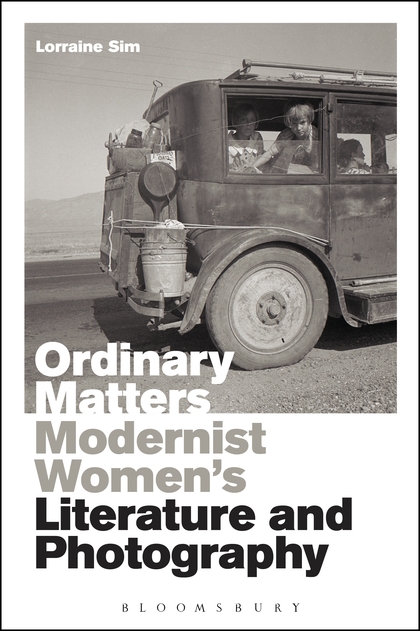
What inspired you to write Ordinary Matters?
The idea developed from my first book, Virginia Woolf: the Patterns of Ordinary Experience. Towards the end of that project I realised there was much more that I wanted to explore, both in terms of the concept of the everyday and its applications to modernism and cultural histories of early twentieth-century modernity. I remember reading H.D.’s fascinating wartime memoir, The Gift, while I was working on my book on Woolf, and seeing some of Lee Miller’s photographs of London during the Blitz around the same time, and I felt I needed to extend my exploration of the ordinary to a broader range of women writers, artists and contexts. The final chapter of Virginia Woolf looked at what I termed the ‘ethics of the ordinary’ in her oeuvre. This idea, of the ways in which the ordinary functions as a site of value (be it personal, social, moral or political), really fascinated me, and I wanted to explore it in a more comprehensive way. Also, many canonical and contemporary theories on the topic view the everyday negatively, or as requiring radical transformation, and I felt that this was a critical habit or commonplace that itself required interrogation. (more…)
 RhysTranter.com