The alto-saxophonist’s recording for Blue Note documents the tensions inherent in 1960s jazz
Jackie McLean, Destination... Out! (Blue Note, 1964)
Jackie McLean, Destination… Out! (Blue Note, 1964)

On this day in 1963, Jackie McLean stepped into Rudy Van Gelder’s Hackensack studio to record Destination… Out! for Blue Note Records. The album offers an interesting snapshot of the development of jazz during the early 1960s, where bebop and blues begin to give ground to something altogether different: a ‘new thing’, or new ‘avant-garde’.

The alto saxophonist was raised in a New York neighbourhood frequented by some of the most prominent names in jazz. As a young man, he practiced with the likes of Sonny Rollins, Bud Powell, and even found the chops to play in Miles Davis’ band and Art Blakey’s Jazz Messengers.

His style, described by Cook and Morton as “menthol-sharp”, owed more than a small debt to Charlie Parker’s fleet-footed bebop improvisations of the ‘40s, but through his association with Blue Note the musician began to engage with the abstract and exploratory possibilities of free jazz. As such, Destination… Out! moves away from the open accessibility of 1962’s Bluesnik and builds on the progress of what is perhaps McLean’s greatest recording as leader, Let Freedom Ring (1963). (more…)

Lisa Stead discusses the influence of cinema on a generation of interwar women writers
Lisa Stead, Off to the Pictures: Cinema-going, Women's Writing and Movie Culture in Interwar Britain (EUP, 2016)
Lisa Stead, Off to the Pictures: Cinema-going, Women’s Writing and Movie Culture in Interwar Britain (EUP, 2016)

A new book by Lisa Stead uncovers the vital role cinema played in the work of interwar women writers. Entitled Off to the Pictures: Cinemagoing, Women’s Writing and Movie Culture in Interwar Britain, the study explores a range of important but often overlooked figures, from Jean Rhys to Elinor Glyn and C. A. Lejeune. Stead delves into archives and unearths hidden treasures from newspapers and magazines of the time, not to mention a range of literary texts from popular middlebrow fiction to experimental modernism. I caught up with Lisa Stead to discuss her interest in this crucial period for women’s writing, and to ask how cinemagoing still influences the way women construct their own identities.

What led you to write Off to the Pictures?

It all started with magazines. As a postgrad, I got to be fascinated with early film magazines and their address to women. I started looking through hundreds of old issues of 1910s and 1920s fan papers – designed to promote stars and review the latest films and generally keep the cinema alive for their readership by offering gossip and glamour beyond the auditorium. Whilst these papers are crammed full of fascinating period details – fashion tips, advertising etc.— it was the ‘unofficial’ writing inside that hooked me. Fan magazines at this time published letters and poetry from self-professed ‘ordinary’ women, who talk not just about their love for screen stars, but also offer their critical commentary on the cinema, considering its relation to their everyday lives and the distinctly British experience of cinemagoing. (more…)

Innovative arts journal promotes the work of Welsh-born writer, critic, and librettist
music-and-literature-paul-griffiths
Music & Literature (No.7): Paul Griffiths, Ann Quin, Lera Auerbach

Today’s artistic landscape can often feel like a busy marketplace, where voices compete for attention and creative validation. And, as a result, some voices do not get heard. Since its launch in 2012, Music & Literature has been a torchbearer for writers and artists that are often neglected by the mainstream: its first issue was notable for its discussion of avant-garde composer Arvo Pärt, offering an unprecedented glimpse into his life, work, and motivations. Scott Esposito points out that the journal offers ‘the kind of thing that’s unavailable anywhere else’, and he’s right. Music & Literature is a fascinating read for enthusiasts, and a valuable cultural resource for scholars.

Now publishing its seventh volume, Music & Literature is celebrating the work of Welsh-born writer, critic, and accomplished librettist Paul Griffiths. His first novel, Myself and Marco Polo: A Novel of Changes (1989), is a work of speculative fiction that reimagines the life of the world traveller through his memoirs. More recently, Griffiths translated eleven Japanese noh plays, published as The Tilted Cup: Noh Stories (2014) in a beautifully illustrated volume. Paul Griffiths has written five librettos, and is an insightful commentator on modern classic music; he is the author of a number of critical works on topics ranging from electronic music to the history of the string quartet, and was a music critic for both The New Yorker (1992-96) and The New York Times (1997-2005). As if that wasn’t enough, Griffiths is also the biographer of a number of modern composers, from György Ligeti and Bela Bartók to John Cage and Igor Stravinsky. (more…)

Revisiting the jazz innovator’s much overlooked minor classic
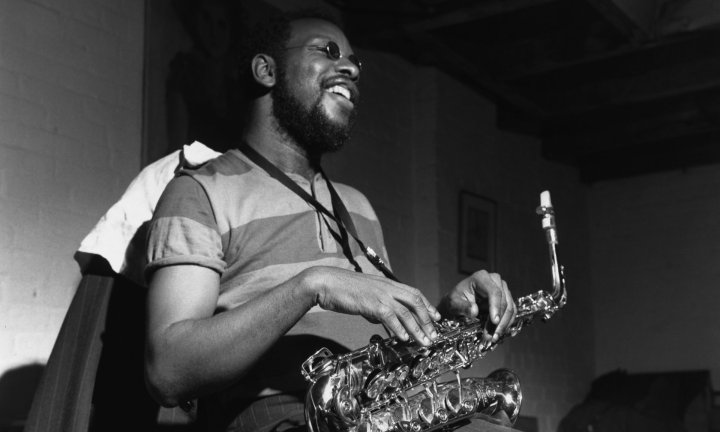
Ornette Coleman with his saxophone during a rehearsal for The Empty Foxhole, September 1966. Photograph: Francis Wolff.
Ornette Coleman‘s The Empty Foxhole was recorded at the Van Gelder studio 50 years ago today. It was his first studio recording for the Blue Note label, and the avant-garde composer wastes no time performing trumpet, violin, and his signature alto-saxophone. Longtime collaborator Charlie Haden (who followed this website before he passed away) appears on bass. But the personnel is perhaps most notable for the debut appearance of Coleman’s son, Denardo, on drums: he was just ten years old at the time.

(more…)

The writer and journalist talks about This Is the Place to Be, and the influences that motivate her
This month brings the release of Lara Pawson’s new memoir, This Is the Place to Be, published by CB editions. Written in a fragmentary form, the book deals with Pawson’s experiences as a witness of war in Angola and Ivory Coast. The writer Joanna Walsh praises it for the way it ‘unpicks the spirals of memory, politics, violence, to trace the boundaries and crossing points of gender and race identity.’ I caught up with Pawson to ask her about This Is the Place to Be, and to find out more about her motivations and influences.

(more…)

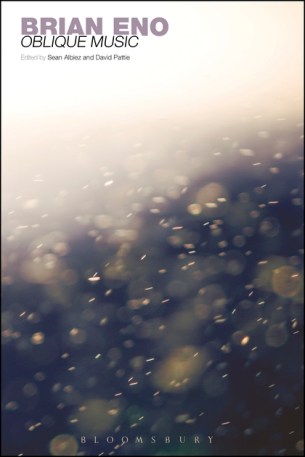
To mark the release of Brian Eno: Oblique Music, a new collection of essays celebrating the musician’s life and work, I talk to the editors about their shared obsession

You previously collaborated on a book of essays about the German electronic group Kraftwerk. What made you decide to put together a book about Eno?

brian-eno-oblique-music-sean-albiez-david-pattie
Brian Eno: Oblique Music, eds. Sean Albiez & David Pattie (Bloomsbury, 2016)

Sean Albiez: In the final stages of the editing and writing process of Kraftwerk: Music Non Stop we started to discuss further book projects as, though we had never met before starting the book, we found that we enjoyed our collaborative process and had many similar musical interests. It think it was David who initially suggested looking at Brian Eno. Eno has been a major figure in music since the 1970s and yet little academic attention had been paid to his work. Any attention that had been given seemed to repeat and replay the same ideas and stories. So we felt that undertaking detailed research on Eno’s diverse activities over several decades from a range of academic perspectives would produce new ways of thinking about his work.

“As Eno says, he’s very interested in the idea of music as landscape; and it’s a landscape that I’m quite happy to inhabit.”

David: As Sean said, we’d enjoyed working together on the Kraftwerk book; and when we were discussing other projects Eno seemed to be the obvious next option. He’s amassed quite a reputation as popular music’s resident intellectual, but, aside from one book in the 1990s, his work hadn’t been given the kind of in-depth analysis it deserves. On a more personal level, I’ve been listening to Eno’s solo work for over three decades, and I find it endlessly fascinating. As Eno says, he’s very interested in the idea of music as landscape; and it’s a landscape that I’m quite happy to inhabit.  (more…)

A celebration of veteran cinematographer Frederick Elmes
the-night-of-riz-ahmed-john-turturro-1-678x381
John Turturro and Riz Ahmed star in HBO’s The Night Of
For the last eight weeks, Sundays have been the night of The Night Of, a dark HBO crime story set in New York. The show blended police procedural, courtroom drama, and character study to produce mystery, suspense, and black humour. Based on a five-part UK drama produced by the BBC in 2008-9, the mini-series centres on a man accused of murder after a night of drugs and heavy drinking. Riz Ahmed is excellent as the young Muslim defendant, inspiring sympathy and suspicion in equal measure. And John Turturro steals the show as an opportunistic lawyer who leads the defence (a role originally intended for late Sopranos star James Gandolfini).

(more…)