

While packing for a trip I pick up an old book I haven’t read for a long time. It’s a 1976 edition of Henri Nouwen’s The Genesee Diary: Report from a Trappist Monastery.
It documents a sabbatical year that the Dutch-born priest and teacher spent at the Cistercian Trappist Abbey of Genesee on New York State, immersing himself in a life of silence, prayer, and manual labour.
The book is enjoyable for its many humorous observations about Nouwen’s daily life, and also for its psychological clarity on the issues he struggles with in this environment.
An early diary entry is indicative, where Nouwen shares an instructive quotation from Robert Pirsig:
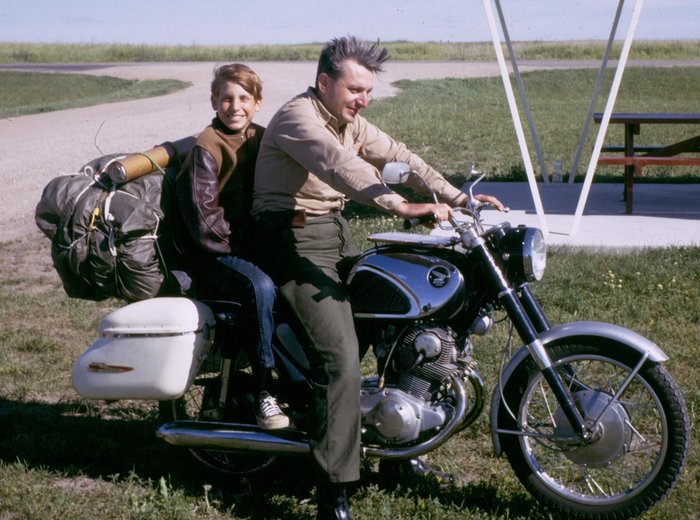
“During the day I often thought about a passage in Zen and the Art of Motorcycle Maintenance where Pirsig makes a distinction between ego climbing and selfless climbing. It seems a very important passage for me, worthwhile quoting here. Trying to explain why his eleven-year-old son, Chris, is not enjoying a camping trip to the ridge of a canyon, Pirsig writes: ‘To the untrained eye ego-climbing and selfless climbing may appear identical. Both kinds of climbers place one foot in front of the other. Both breathe in and out at the same rate. Both stop when tired. Both go forward when rested. But what a difference! The ego-climber is like an instrument that’s out of adjustment. He puts his foot down an instant too soon or too late. He’s likely to miss a beautiful passage of sunlight through the trees. He goes on when the sloppiness of his step shows he’s tired. He rests at odd times. He looks up the trail trying to see what’s ahead even when he knows what’s ahead because he just looked a second before. He goes too fast or too slow for the conditions and when he talks his talk is forever about somewhere else, something else. He’s here but he’s not here. He rejects the here, is unhappy with it, wants to be farther up the trail but when he gets there will be just as unhappy because then the it will be ‘here.’ What he is looking for, what he wants, is all around him, but he doesn’t want that because it is all around him. Every step’s an effort both physically and spiritually because he imagines his goal to be external and distant.’”
— Henri Nouwen, quoting Robert Pirsig’s Zen and the Art of Motorcycle Maintenance in The Genesee Diary
 RhysTranter.com