
You previously collaborated on a book of essays about the German electronic group Kraftwerk. What made you decide to put together a book about Eno?
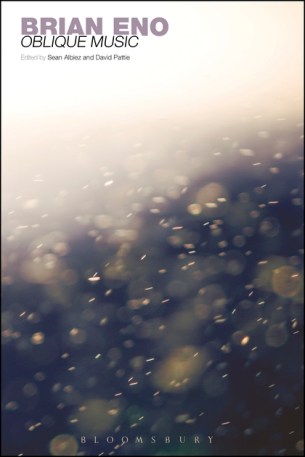
Sean Albiez: In the final stages of the editing and writing process of Kraftwerk: Music Non Stop we started to discuss further book projects as, though we had never met before starting the book, we found that we enjoyed our collaborative process and had many similar musical interests. It think it was David who initially suggested looking at Brian Eno. Eno has been a major figure in music since the 1970s and yet little academic attention had been paid to his work. Any attention that had been given seemed to repeat and replay the same ideas and stories. So we felt that undertaking detailed research on Eno’s diverse activities over several decades from a range of academic perspectives would produce new ways of thinking about his work.
“As Eno says, he’s very interested in the idea of music as landscape; and it’s a landscape that I’m quite happy to inhabit.”
David: As Sean said, we’d enjoyed working together on the Kraftwerk book; and when we were discussing other projects Eno seemed to be the obvious next option. He’s amassed quite a reputation as popular music’s resident intellectual, but, aside from one book in the 1990s, his work hadn’t been given the kind of in-depth analysis it deserves. On a more personal level, I’ve been listening to Eno’s solo work for over three decades, and I find it endlessly fascinating. As Eno says, he’s very interested in the idea of music as landscape; and it’s a landscape that I’m quite happy to inhabit. (more…)


 “As a literary structure, the recounted walk encourages digression and association, in contrast to the stricter form of a discourse or the chronological progression of a biographical or historical narrative. A century and a half later, James Joyce and Virginia Woolf would, in trying to descrive the workings of the mind, develop the style called stream of consciousness. In their novels Ulysses and Mrs. Dalloway, the jumble of thoughts and recollections of their protagonists unfolds best during walks. This kind of unstructured, associative thinking is the kind most often connected to walking, and it suggests walking as not an analytical but an improvisational act. Rousseau’s Reveries [of the Solitary Walker] are one of the first portraits of this relationship between thinking and walking.”

